Eliciting Desire

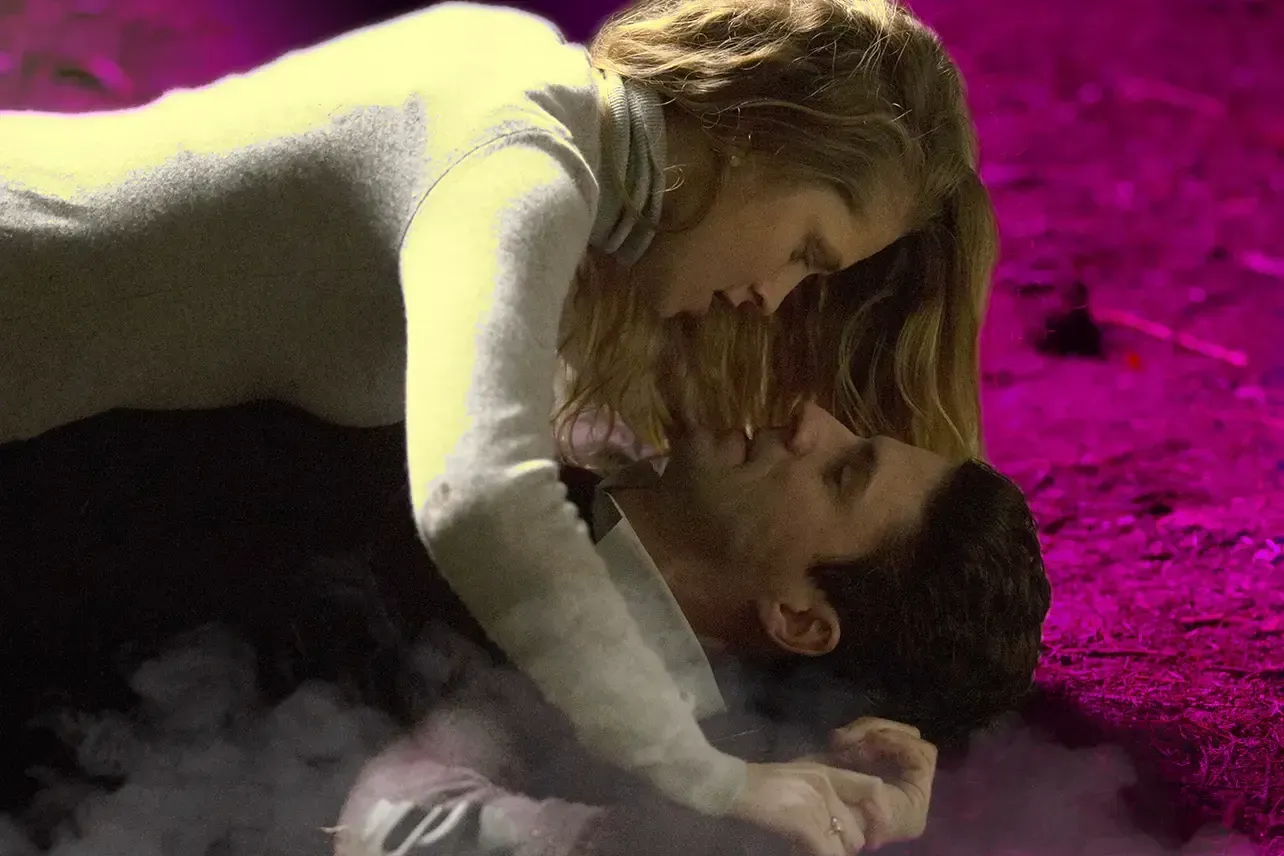
A romantic scene from A Discovery of Witches: a woman leans in to kiss a man on a misty, magenta-lit floor

A Picture is Worth a Thousand Words: The Power of Imaging Systems in Film and TV

As writers, we often focus on crafting the perfect dialogues, story arcs, and character developments for our scripts. However, one vital aspect that often gets overlooked is the imaging system. How a scene is captured, lit, and edited can profoundly impact the tone and emotions of a script. In this blog post, we will explore how imaging systems affect the mood and subtext of a scene in movies or television shows and the importance of considering it as a writer.

One of the most crucial visual elements of a scene is the lighting. Lighting sets the tone for the scene, emphasizing certain areas or characters and casting everything else in shadow. For instance, low-key lighting with harsh shadows in a horror movie can make the scene more unsettling and eerie. In contrast, soft lighting can create a warm and inviting atmosphere in a romantic comedy. As a writer, it is essential to consider the scene's tone and work with the cinematographer to bring it to life.

The framing and perspective of the camera also contribute significantly to the scene's mood. The distance and angle of a shot can implicitly communicate characters' relationships, power hierarchies, and emotional states. For instance, a close-up shot can convey intimacy and emotional intensity, whereas a wide shot can highlight the characters' surroundings and circumstances. As a writer, understanding the visual language of shots can help you better convey your messages to the audience.

The editing process is where the imaging system comes together, setting the film's or TV show's rhythm and pace. The way that shots are arranged, the speed at which they are cut, and the use of transitions can evoke a wide range of emotions or subtle subtext. For instance, a rapid back-and-forth shot can create tension and urgency, while dissolves can indicate a change in time or location. As a writer, working closely with the editor can help you ensure that the intended mood of your scene is conveyed to the audience.

Color grading is another essential part of the imaging system, affecting the scene's color scheme, contrast, and saturation. Color grading can imbue a scene with various emotions or connotations, creating a particular atmosphere or subtext. For instance, a cool blue color palette can convey a somber or melancholic mood, while a warm orange tone can create a sense of excitement or optimism. As a writer, collaborating with the colorist can help you achieve the desired tone and subtext of the scene.

As writers, it is essential to understand an imaging system's impact on a scene's tone and emotions. Collaborating with the cinematographer, editor, and colorist can help you bring your story's visuals to life and convey the intended mood and subtext to the audience. By considering the lighting, framing, editing, and color grading, writers can elevate their scripts from good to great, using the power of a picture to tell a thousand words.


Here are some videos with more great advice on the subject:

Robert McKee: https://www.youtube.com/watch?v=2CNj2Rt92Cs

Studio Binder: https://www.youtube.com/watch?v=eE4QalFJkpY
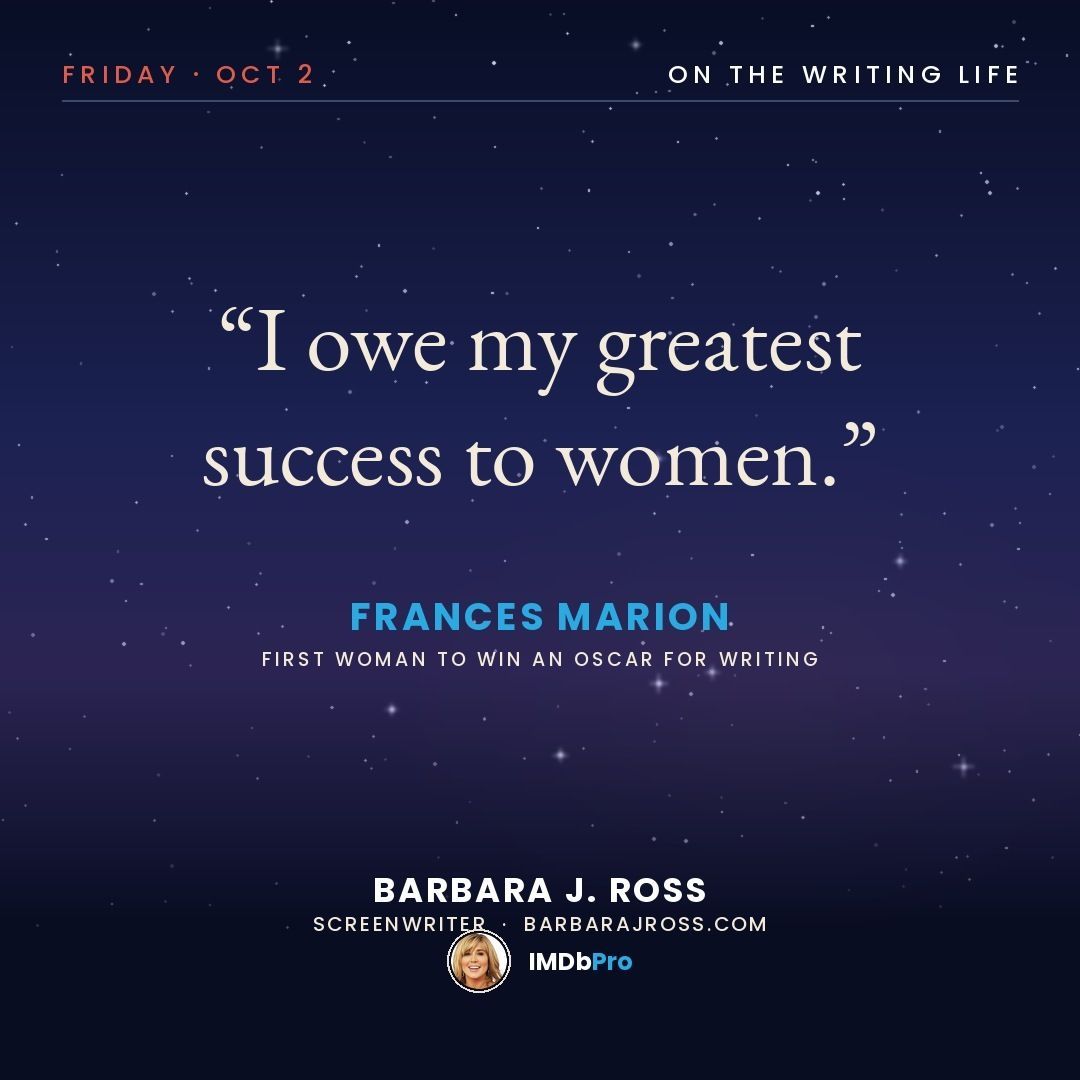
Quote card reading I owe my greatest success to women, Frances Marion, with a photo of screenwriter Barbara J. Ross
By Barbara J. Ross • October 2, 2026
Frances Marion was the highest paid screenwriter in Hollywood and the first woman to win an Oscar for writing. A woman gave her the first job.
Social card reading One Finds the Buyer, One Is the Buyer, with a photo of screenwriter Barbara J. Ross
By Barbara J. Ross • October 1, 2026
A sales agent works for you. A distributor is the buyer. Calling the wrong one first costs first-time filmmakers real money.
Social card reading 35% of Everything Except You, with a photo of screenwriter Barbara J. Ross
By Barbara J. Ross • September 30, 2026
California’s film credit now pays up to 35% on a $750 million pool. Writers are non-qualified spend, and here is why that still matters.
Social card reading NDA or Not to NDA, with a photo of screenwriter Barbara J. Ross
By Barbara J. Ross • September 29, 2026
Almost nobody will sign a writer’s NDA. What a submission release actually says, and where to protect the work instead.
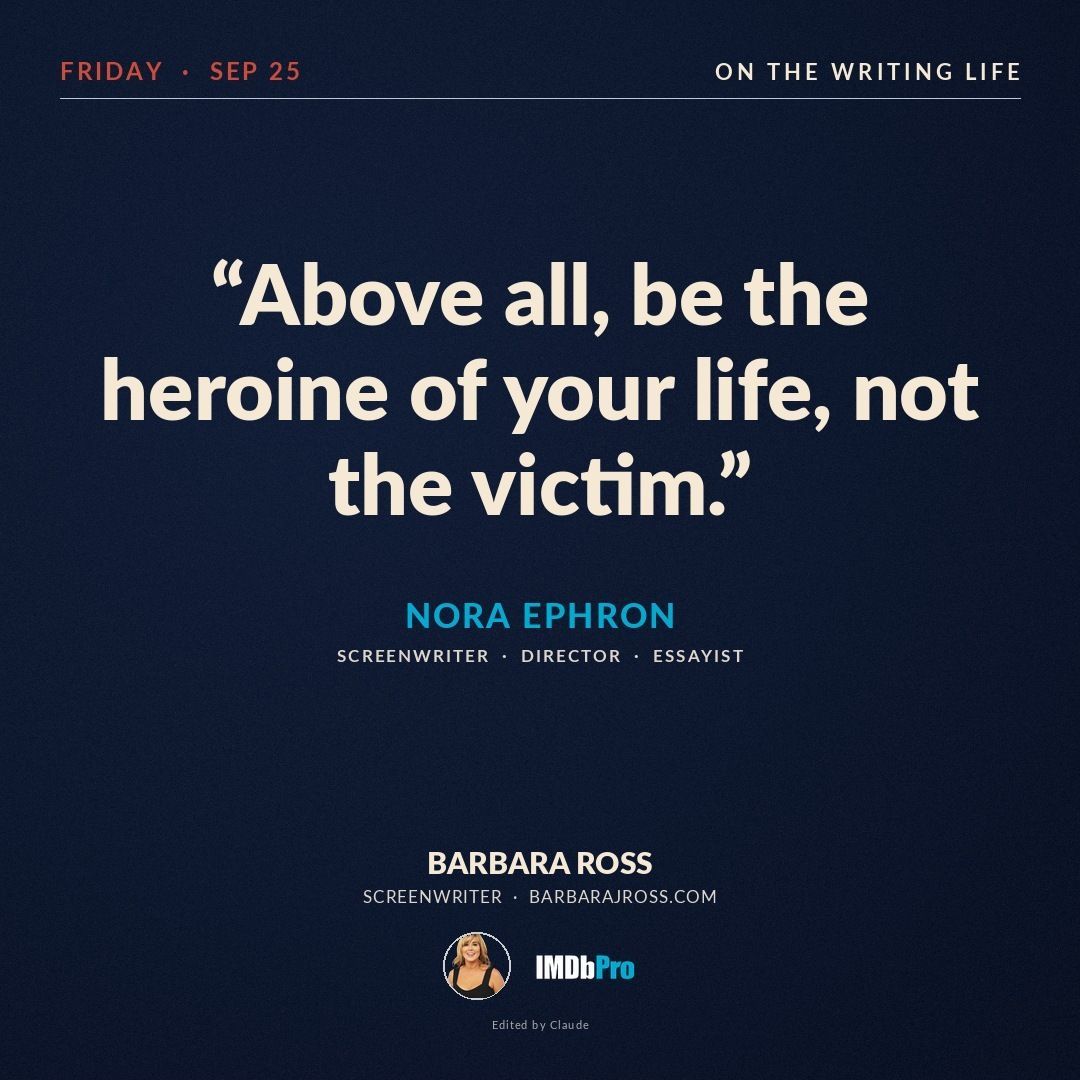
Quote card: Above all, be the heroine of your life, not the victim - Nora Ephron, on the Barbara J. Ross screenwriting blog
By Barbara J. Ross • September 25, 2026
Nora Ephron told Wellesley graduates to be the heroine, not the victim. For screenwriters, that line is a business instruction, not a sentiment.
Light blue blog card reading Ticking Clocks, tagged On Screenwriting, with a photo of Barbara J. Ross
By Barbara J. Ross • September 24, 2026
A ticking clock is a deadline the audience can count. Not a mood, a number that gets smaller while they watch. A deadline with no consequence is a calendar.
Light blue blog card reading Scene Buttons, tagged On Screenwriting, with a photo of Barbara J. Ross
By Barbara J. Ross • September 23, 2026
A button is the last beat of a scene, the line that makes the cut feel decided. The best one is already in the scene, one beat before you stopped.
Light blue blog card reading Writing the Phone Call, tagged On Screenwriting, with a photo of Barbar
By Barbara J. Ross • September 22, 2026
A phone call takes away everything you usually use. It's only half a scene, and you write the other half: what each person does, and what each one can't see.
Light blue blog card reading Chain of Title, tagged On Business, with a photo of screenwriter Barbar
By Barbara J. Ross • September 21, 2026
Chain of title is the paper trail that proves who owns the story. If a lawyer can't draw a clean line from the idea to you, the script can't be bought.
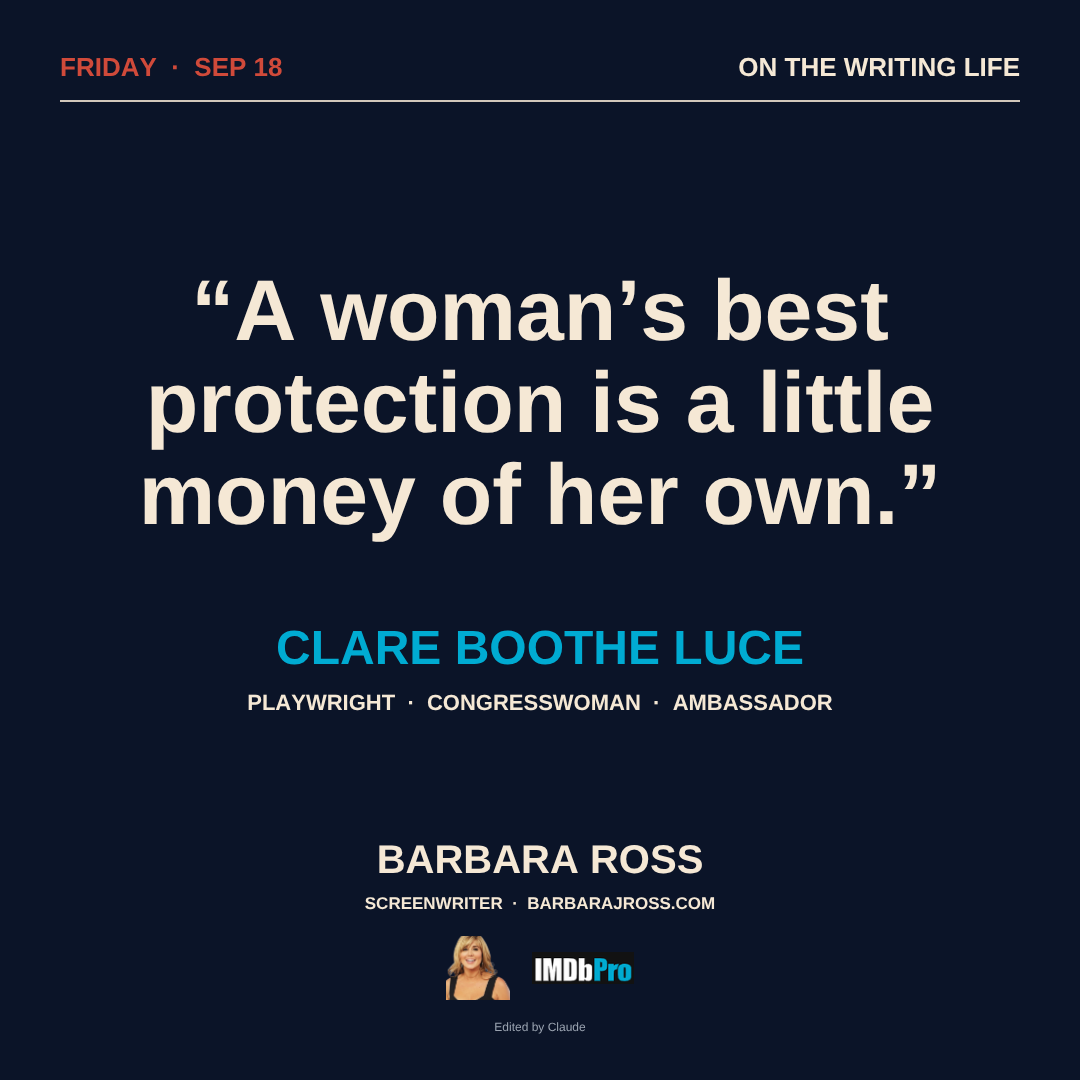
Dark blue quote card reading A woman's best protection is a little money of her own, credited to Cla
By Barbara J. Ross • September 18, 2026
Clare Boothe Luce knew what it took to get into those rooms. Having your own money isn't about being rich. It's about being able to say no and to walk out.
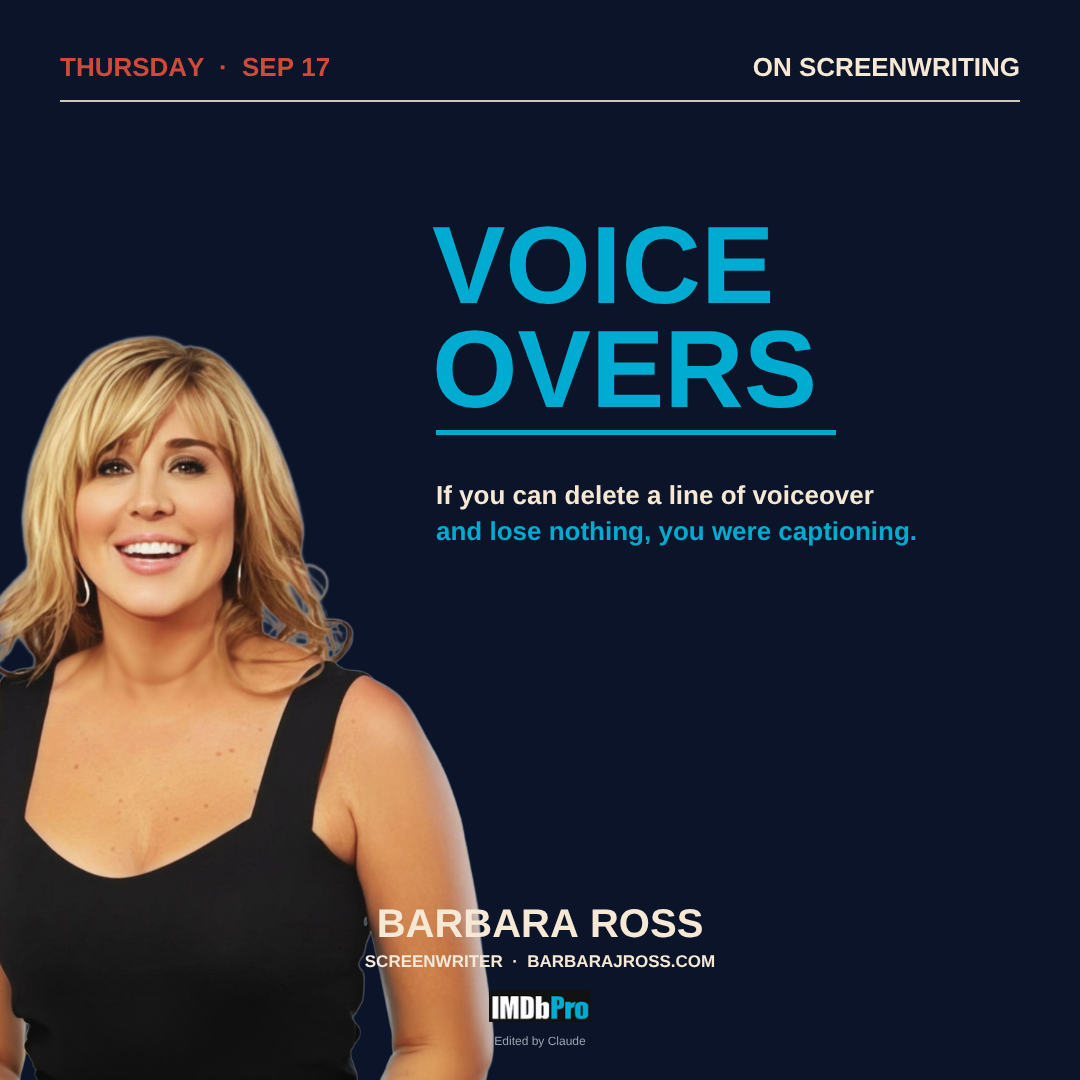
Blog card reading Voiceovers, with a photo of screenwriter Barbara Ross on a dark blue background
By Barbara J. Ross • September 17, 2026
Voiceover isn't cheating, but captioning the frame is. Goodfellas and Sunset Boulevard show the difference, and one test tells you which one you wrote.
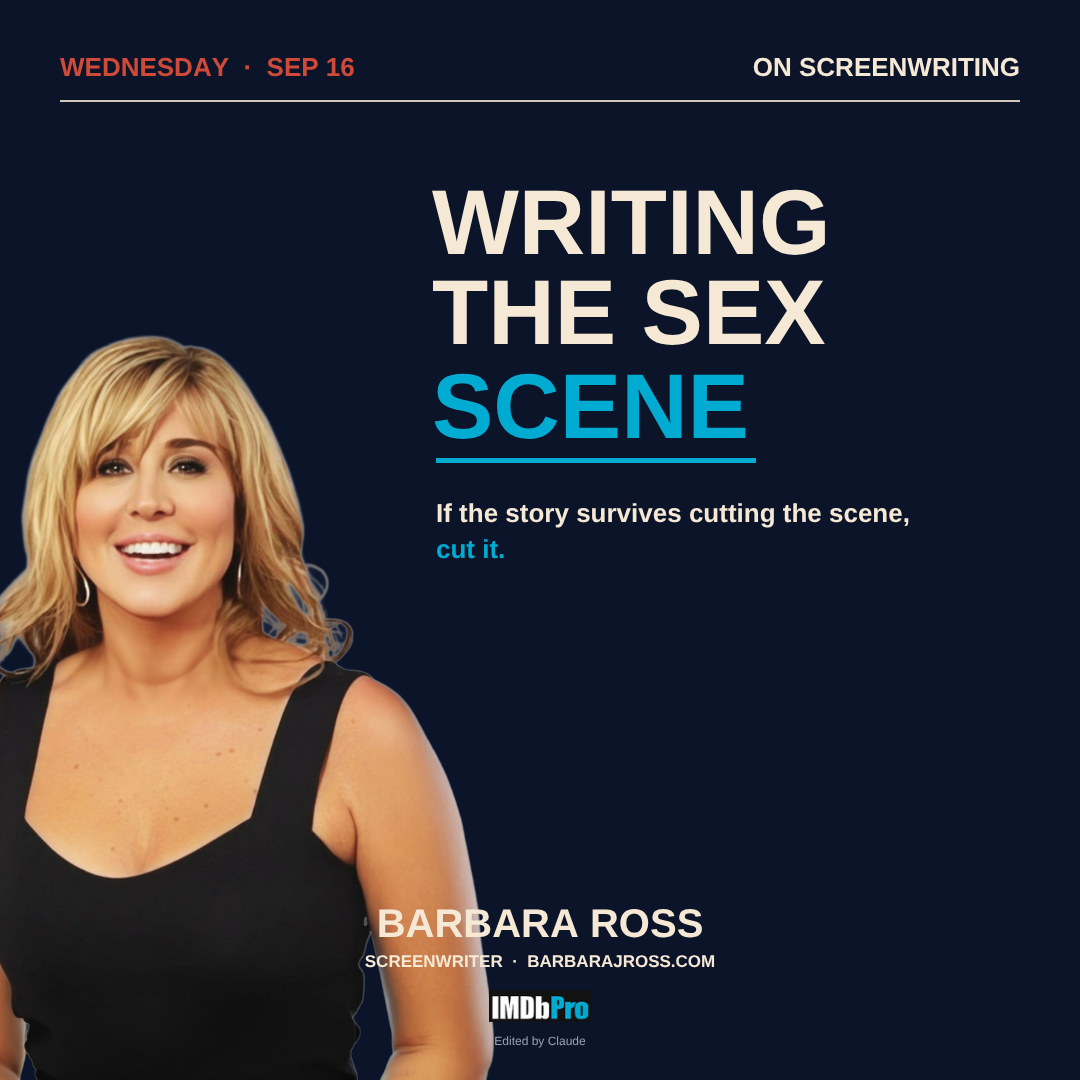
Blog card reading Writing the Sex Scene, with a photo of screenwriter Barbara Ross on a dark blue ba
By Barbara J. Ross • September 16, 2026
The good sex scenes are negotiations. Write the decision, not the choreography, and remember the agent and the line producer read the pages too.
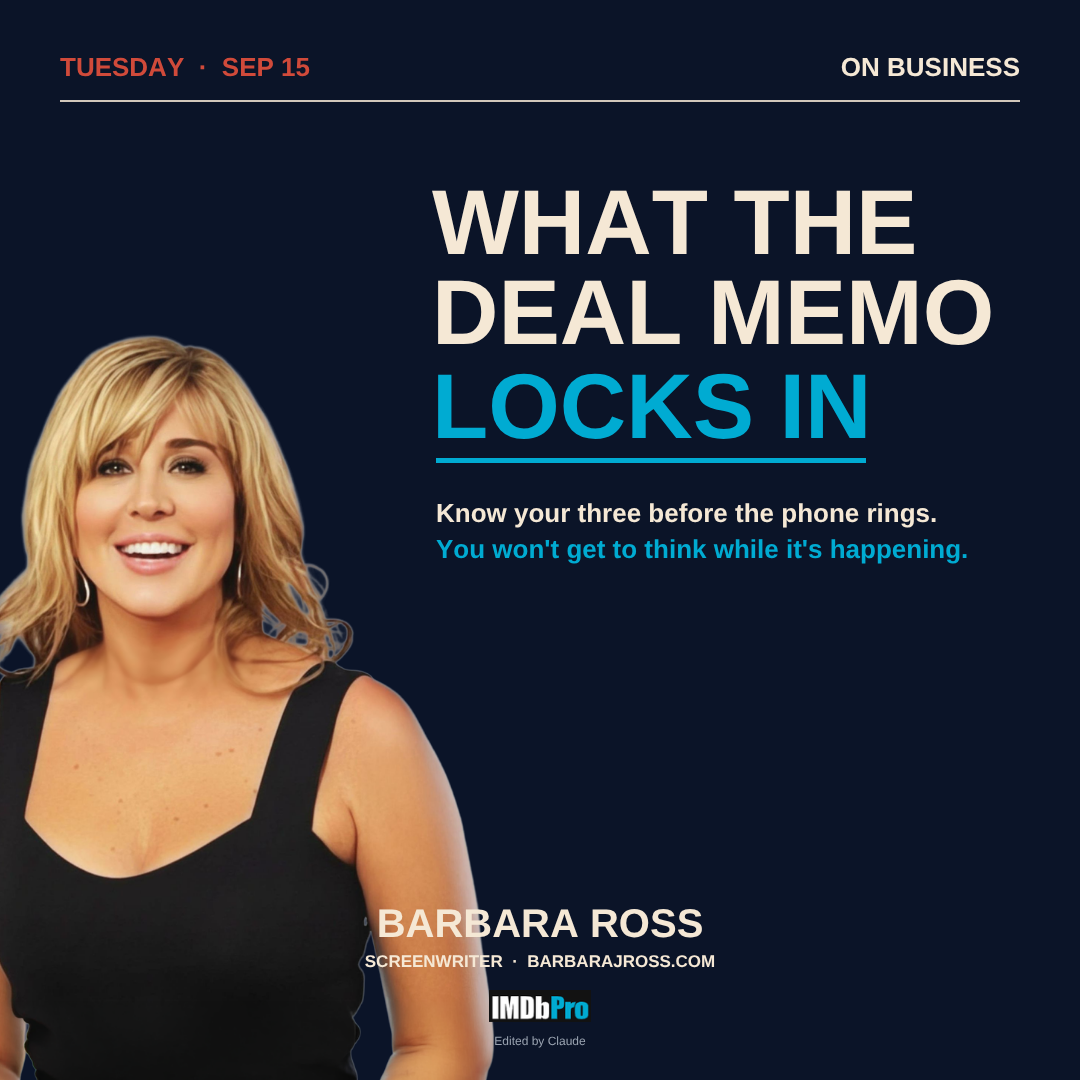
Blog card reading What the Deal Memo Locks In, with a photo of screenwriter Barbara Ross on a dark b
By Barbara J. Ross • September 15, 2026
The deal memo takes an afternoon and the lawyers argue from it for a year. Credit, rewrite steps, bonus triggers, reversion: know your three before the call.
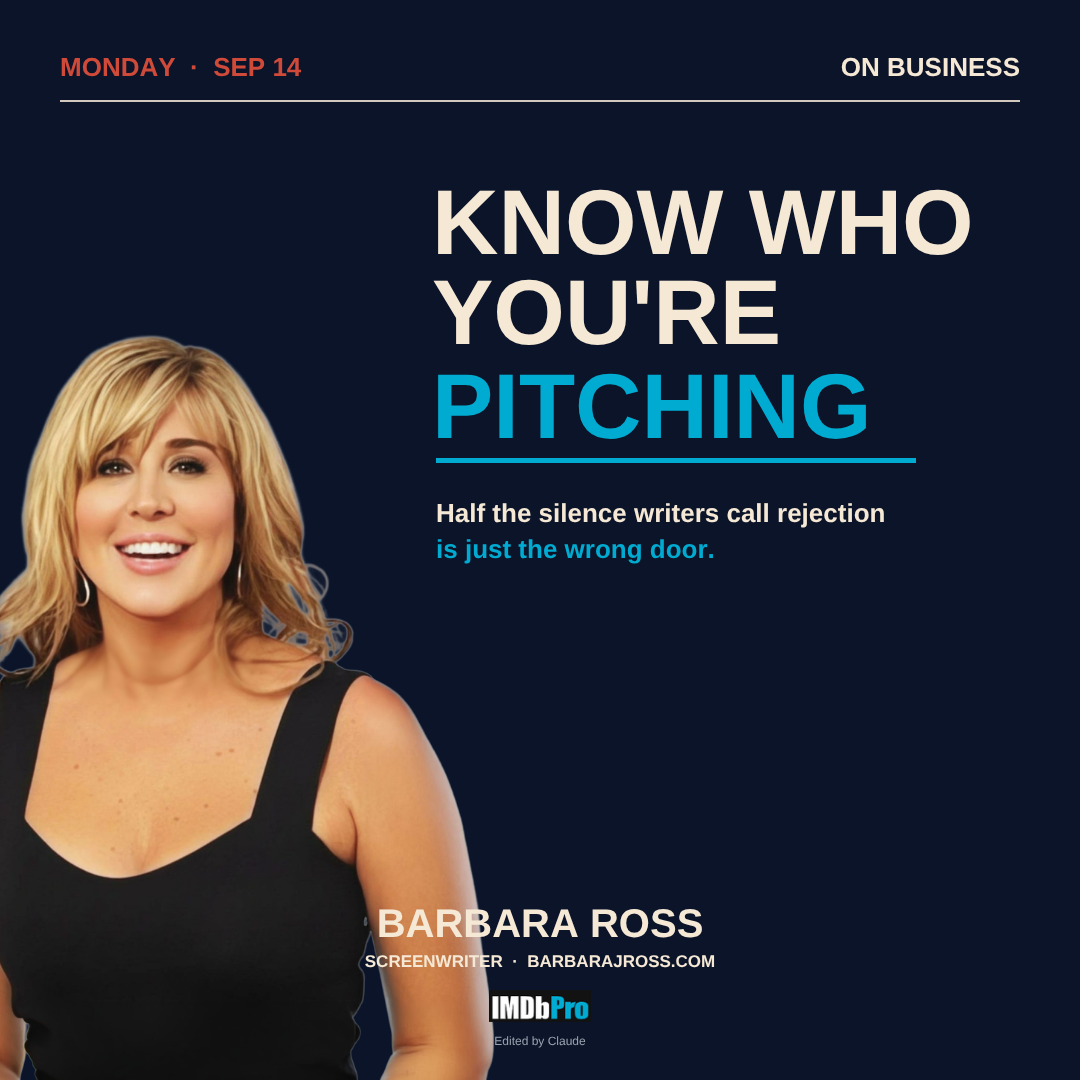
Blog card reading Know Who You're Pitching, with a photo of screenwriter Barbara Ross on a dark blue
By Barbara J. Ross • September 14, 2026
Lenders don't buy scripts. Fifteen minutes of research tells you whether the name on your desk is equity or debt, and whether your pitch has any chance.
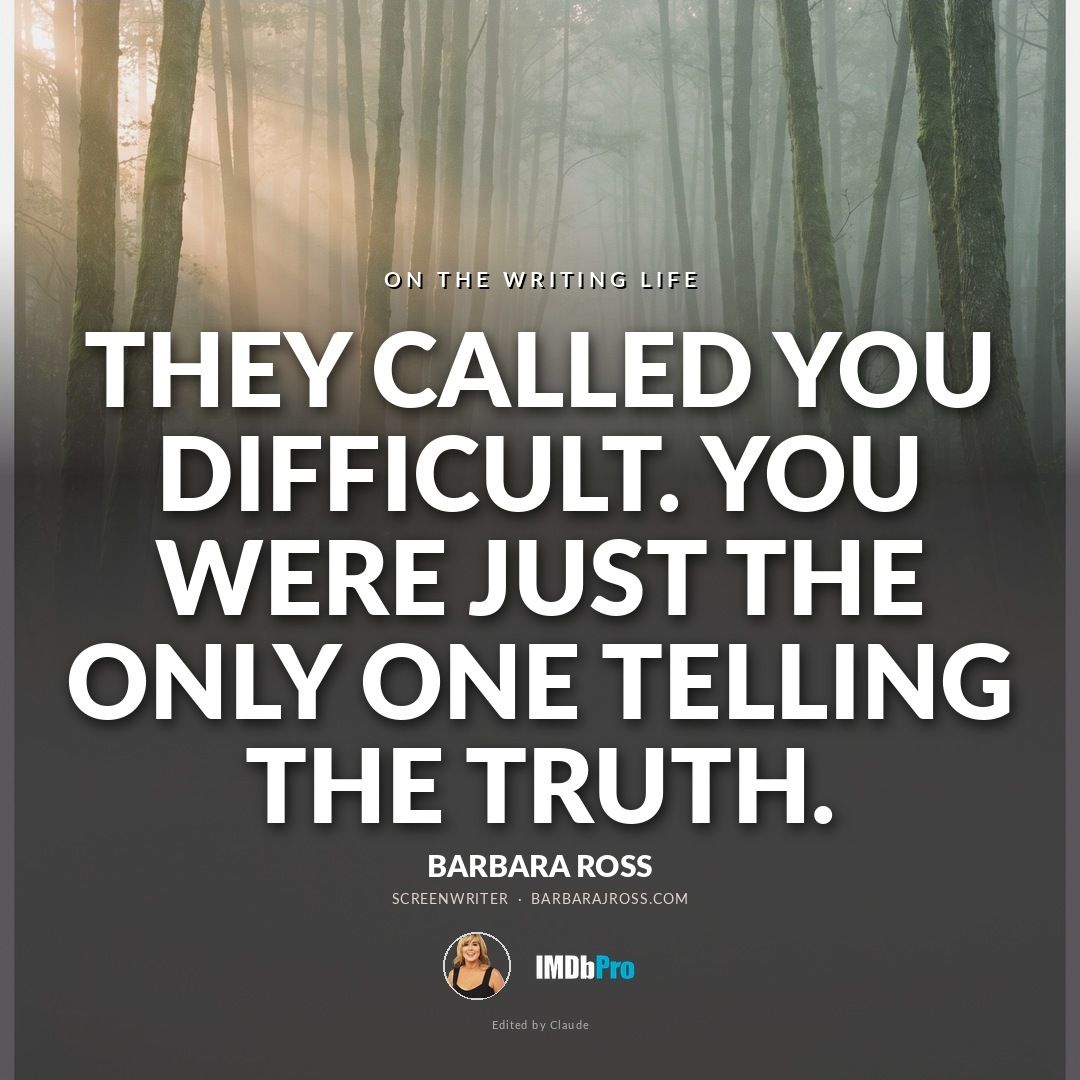
Quote card reading They called you difficult, you were just the only one telling the truth, by Barbara J. Ross
By Barbara J. Ross • September 11, 2026
Difficult is what they call you when you ask who is paying and want the credit in writing. It describes the inconvenience, not your temperament.
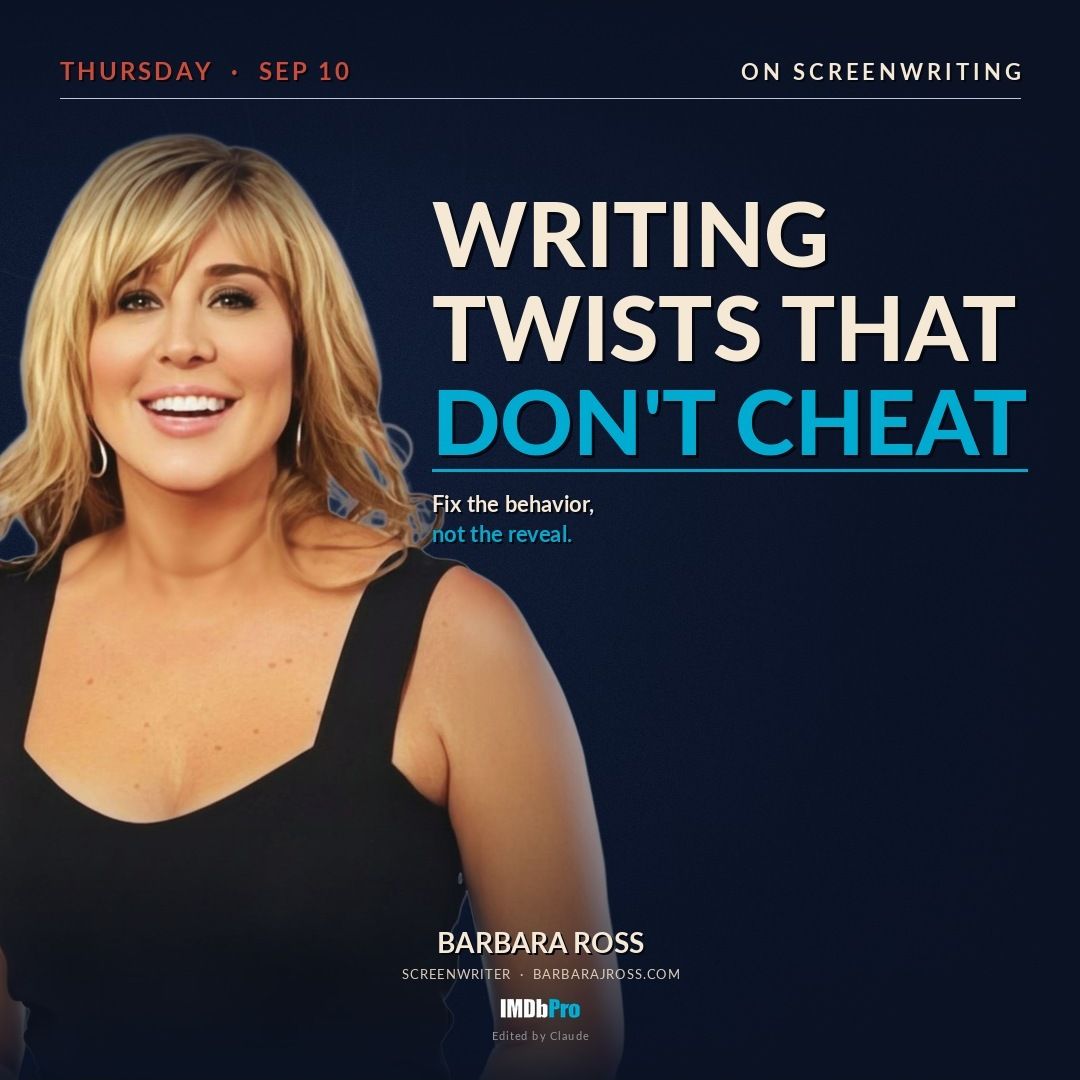
Social card reading Writing Twists That Don't Cheat, with a photo of screenwriter Barbara J. Ross
By Barbara J. Ross • September 10, 2026
Withheld information is not a twist, it is a trick. A real twist uses what the audience already had and shows them they read it wrong.
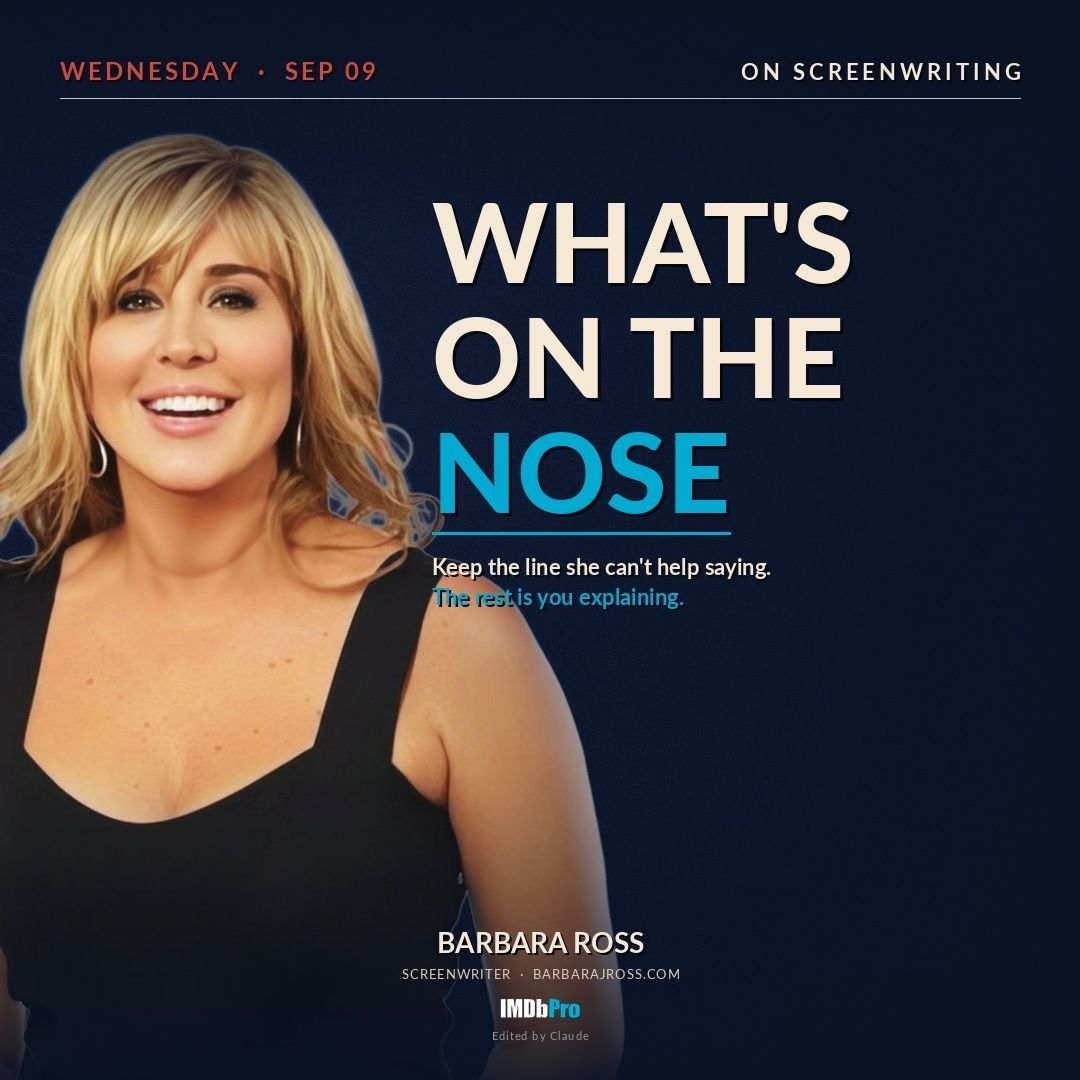
Social card reading What's On the Nose, with a photo of screenwriter Barbara J. Ross
By Barbara J. Ross • September 9, 2026
On-the-nose dialogue kills a scene because it leaves the audience nothing to do. The fix is not vagueness. It is giving the character something else to want.
Social card reading What the Sales Agent Tells the Buyer, with a photo of screenwriter Barbara J. Ross
By Barbara J. Ross • September 8, 2026
The buyer asks who else is looking. That answer, not your draft, is what moves the number. What agents are really managing is scarcity.
Social card reading Tax Credits Producers Chase, with a photo of screenwriter Barbara J. Ross
By Barbara J. Ross • September 7, 2026
Georgia pays up to 30 percent back on qualified spend. That credit decides where your movie shoots, often before anyone reads your pages.
Quote card reading They told you it was too emotional, it was just true, by Barbara J. Ross
By Barbara J. Ross • September 4, 2026
Too emotional is the note you get when the scene is working and the room is uncomfortable. Keep the line. Cut the three around it that explain it.
Social card reading The Flashback That Earns an Interruption, with a photo of screenwriter Barbara J. Ross
By Barbara J. Ross • September 3, 2026
A flashback that only explains is a footnote. The one that works takes something the audience already watched and makes it mean the opposite.
Social card reading The Character Who Only Says Yes, with a photo of screenwriter Barbara J. Ross
By Barbara J. Ross • September 2, 2026
A character whose job is to agree cannot generate a scene. Give her a want that costs your protagonist something, or cut her lines entirely.
Social card reading The Back End Never Arrives, with a photo of screenwriter Barbara J. Ross
By Barbara J. Ross • September 1, 2026
Net profit is a defined term written by the people who have to pay it. Negotiate fixed compensation, production bonuses and gross-defined escalators instead.
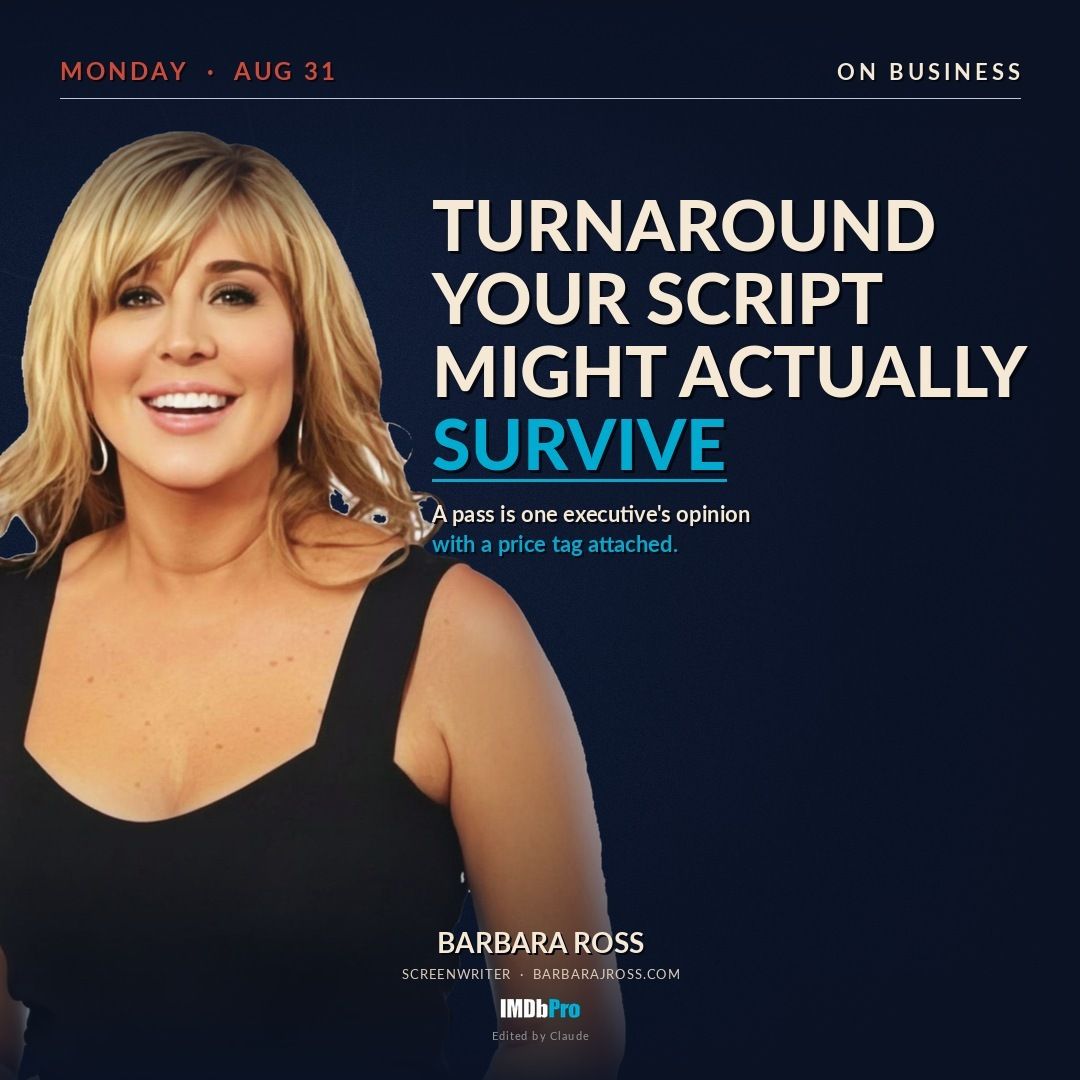
Social card reading Turnaround Your Script Might Actually Survive, with a photo of screenwriter Barbara J. Ross
By Barbara J. Ross • August 31, 2026
Turnaround is not a death sentence. It is a number the next buyer has to clear before a single new page exists. Columbia put E.T. in turnaround.
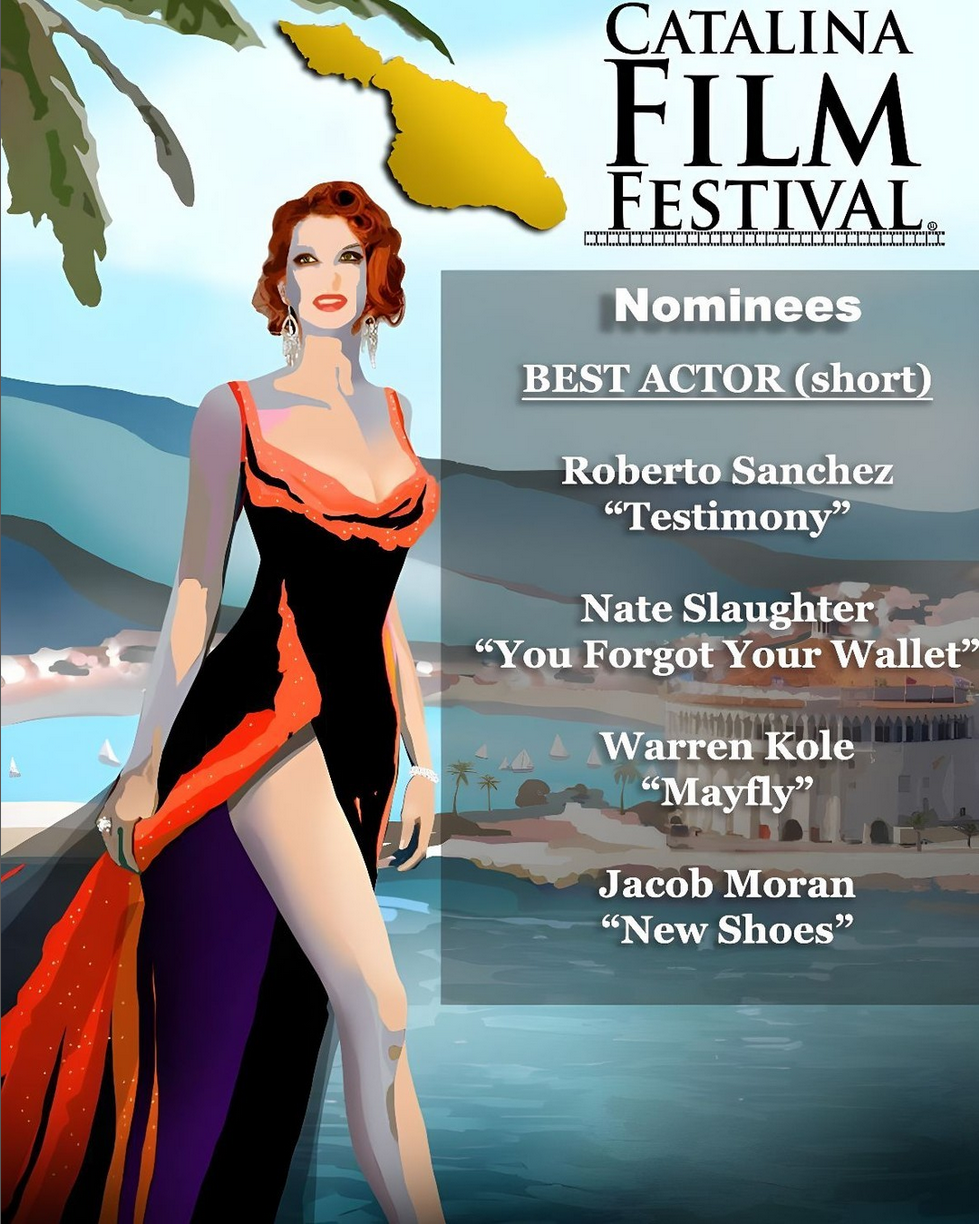
Catalina Film Festival poster: an illustrated woman in a red gown beside the Best Actor nominees
By Barbara J. Ross • October 3, 2023
At B Story Media, I go to film festivals to meet writers, producers and industry insiders. Catalina Film Festival is my favorite, and here's why.
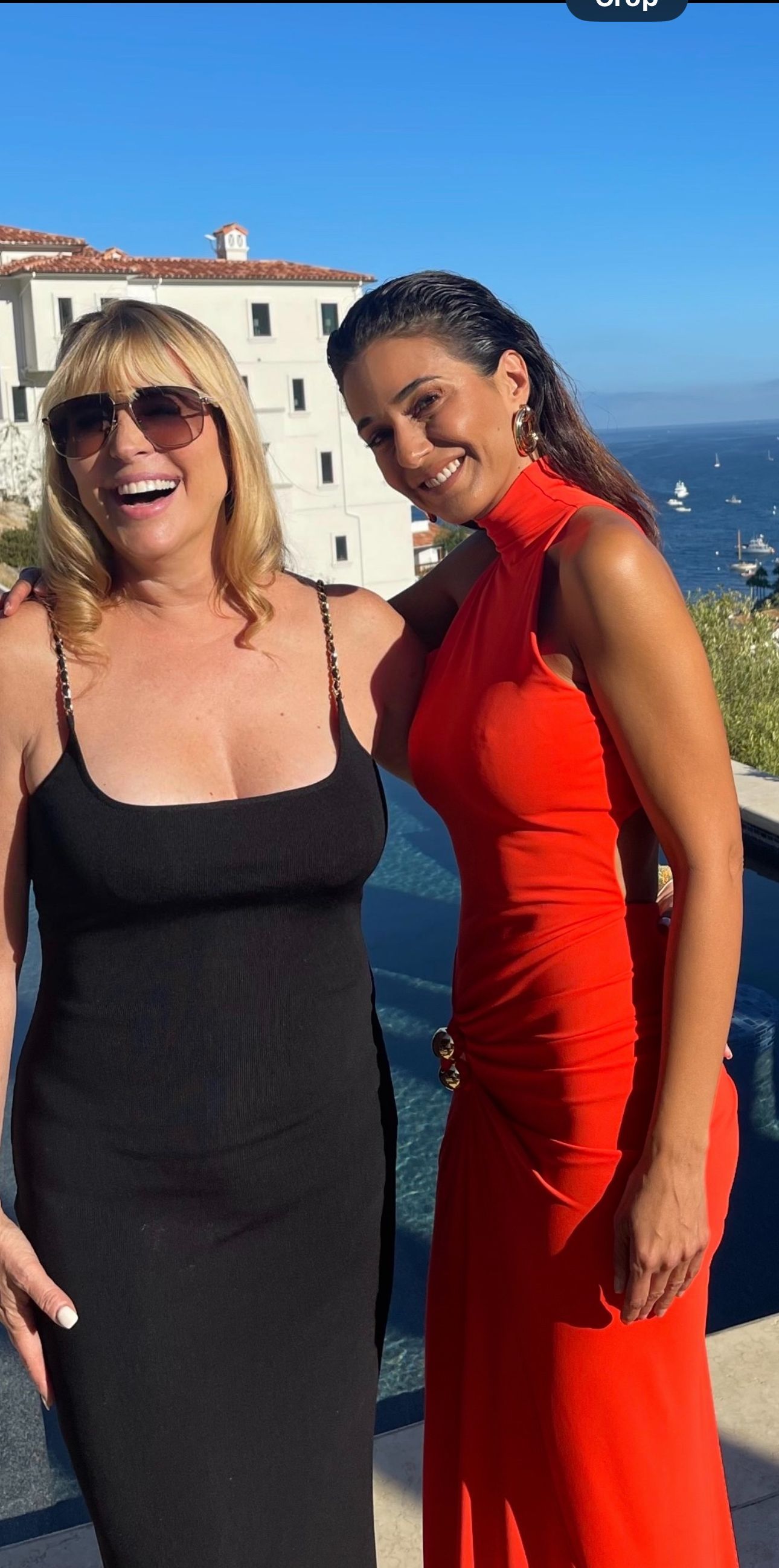
Barbara J. Ross and a friend in a red dress laughing by the ocean
By Barbara J. Ross • May 22, 2023
Networking is hard for an introvert, but it's part of a writer's life. Here's how I prepare for writers' events, break the ice and follow up afterward.
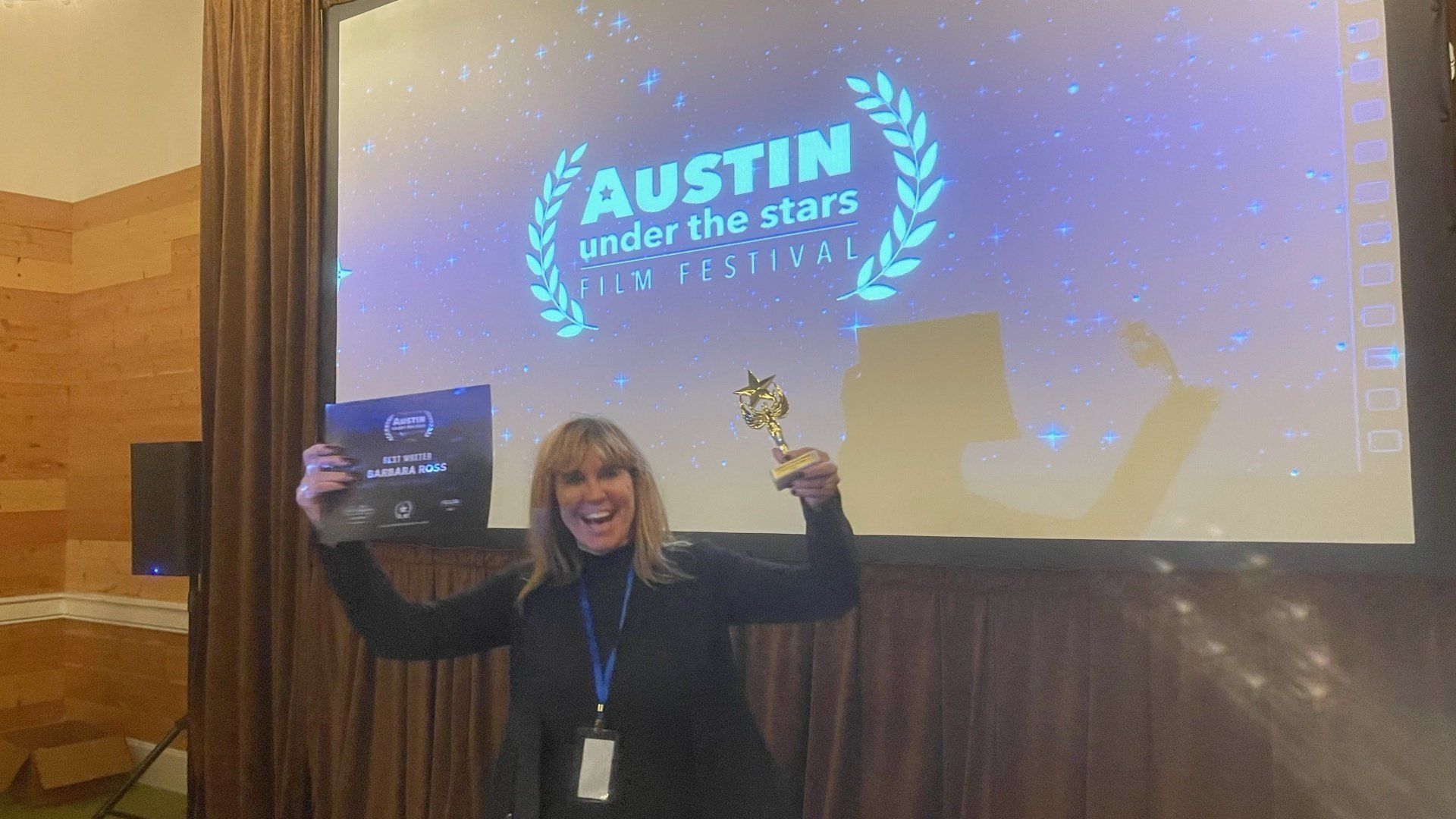
Barbara J. Ross holding her Best Writer trophy at Austin Film Festival Under the Stars
By Barbara J. Ross • December 28, 2021
My rewrite of #WHATNEXT won Best Writer at Austin Film Festival Under the Stars, and the short also took the People's award. What a night!
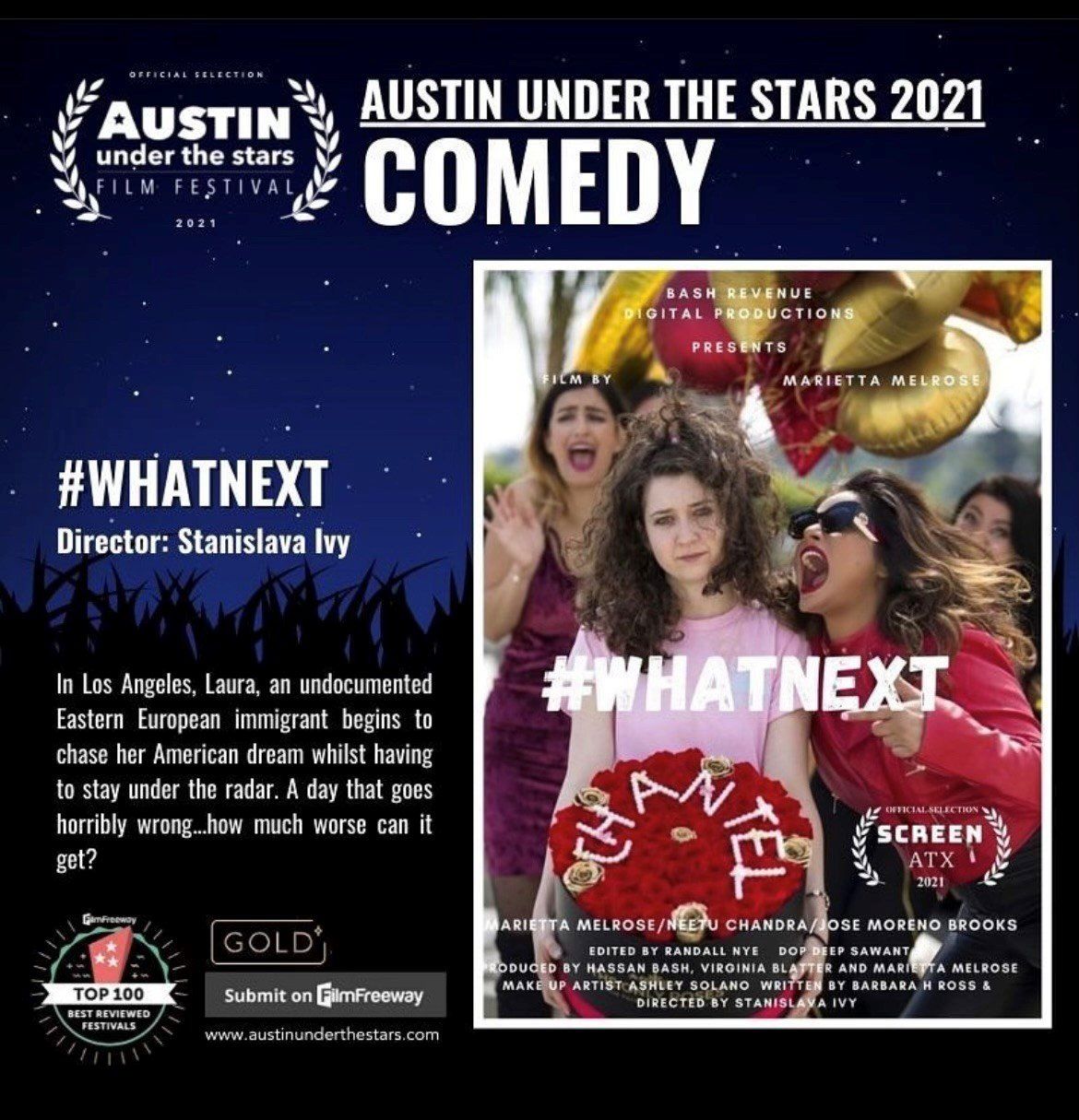
#WHATNEXT poster for Austin Under the Stars 2021, comedy, directed by Stanislava Ivy
By Barbara J. Ross • October 7, 2021
#WHATNEXT, starring Marietta Melrose, was invited to screen at Austin Film Festival Under the Stars. I rewrote the script for this comedy short.
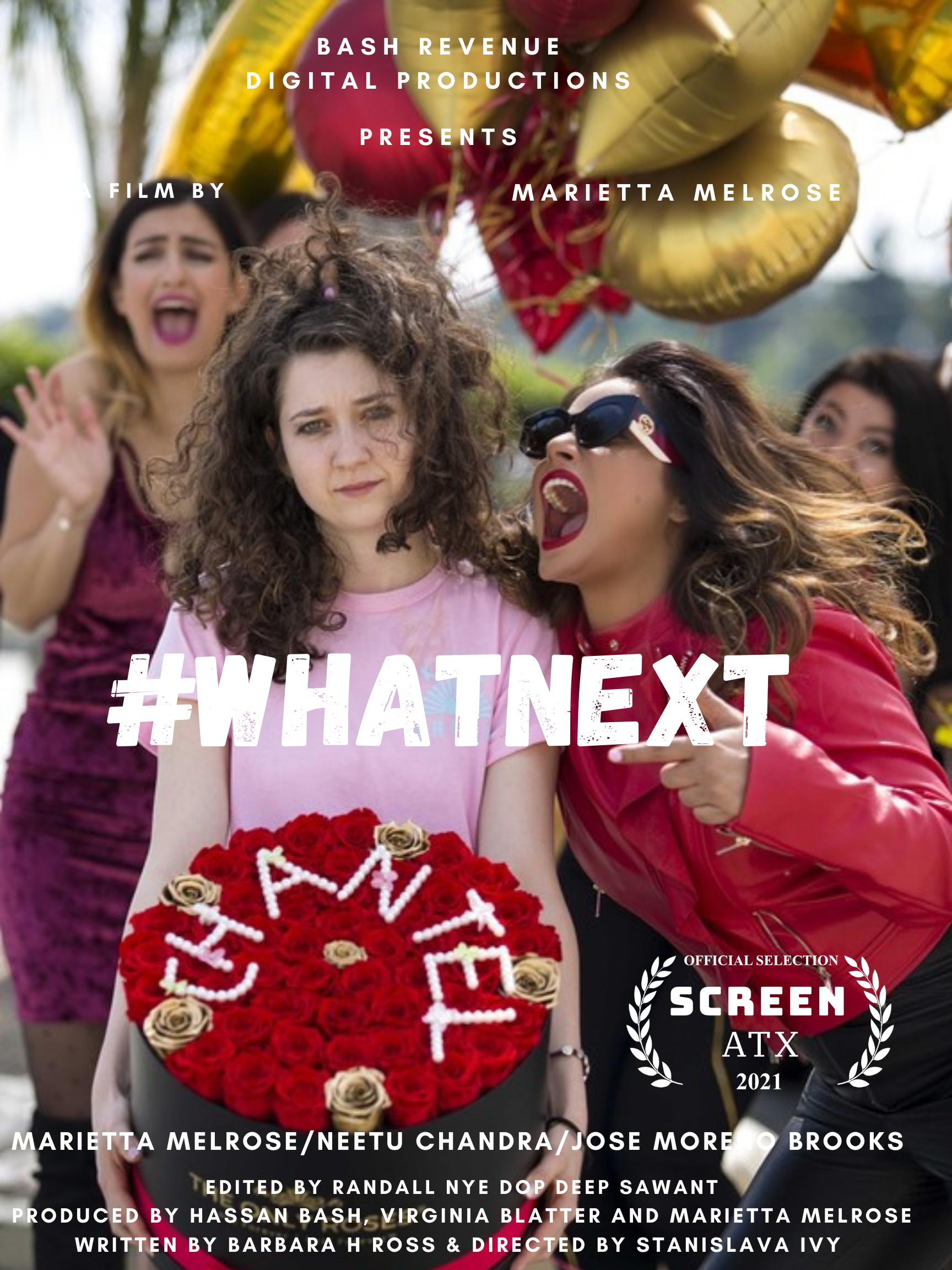
#WHATNEXT poster starring Marietta Melrose, written by Barbara J. Ross, directed by Stanislava Ivy
By Barbara J. Ross • October 7, 2021
I'm so happy for Marietta Melrose: #WHATNEXT was invited to screen at the LA Femme International Film Festival at Regal Cinemas in downtown LA.