Give them something to do that only they would do.
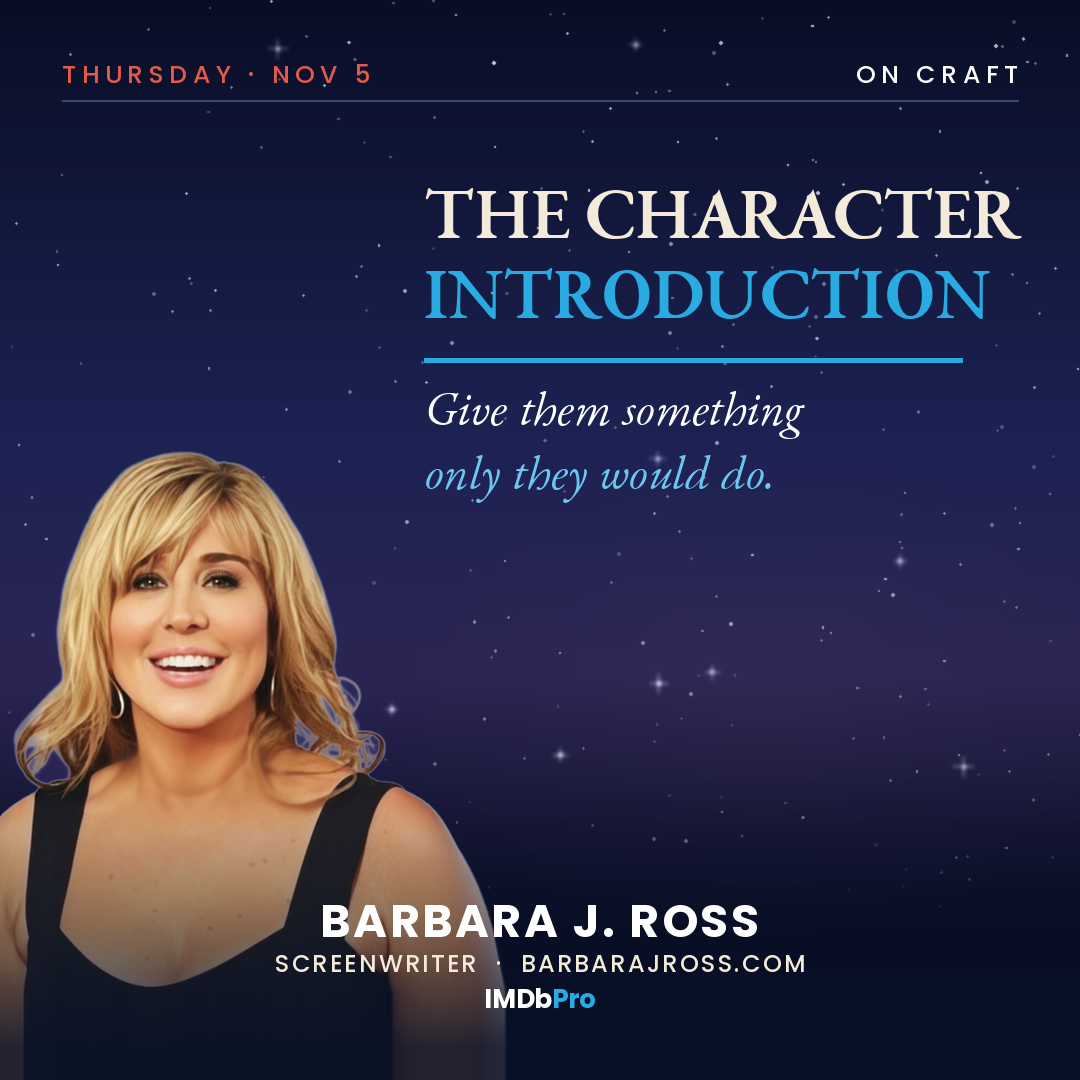
TL;DR. Most character introductions on the page are casting notices. "SARAH, 30s, beautiful but doesn't know it, tired eyes and a wary smile." Nobody can film "doesn't know it," and adding more description makes it worse, not better. What fixes it is giving the character something to do that only they would do. Keep the description to age and one costume detail, put the trait the story is going to test into their first beat at a small scale, and then test whether anybody else in your script could have done that action. If they could, you named a character. You didn't introduce one.
Why doesn't more description help?
Because the problem isn't the amount. It's that the information has nowhere to go.
Take the line above. Beautiful but doesn't know it is a casting note. It tells an actor nothing to play and a camera nothing to point at, and the reader skims it, because they've read four hundred versions of it. Tired eyes and a wary smile is the same thing in a nicer outfit.
Then a writer who notices the introduction is thin usually adds. Another sentence about her posture, something about the way she holds her coffee, a line about what her apartment says about her. Now there are five sentences doing the work of none, the page has slowed down, and the reader still can't see her.
The fix goes the other direction. Cut the description and spend the space on behavior.
What does the lean version look like?
Raiders of the Lost Ark. Lawrence Kasdan wrote it, from a story by George Lucas and Philip Kaufman, and Steven Spielberg directed.
The description of Indiana Jones is almost nothing. An American at the head of the party. A short leather jacket, a flapped holster, a brimmed felt hat with a feather in the band. Not one adjective about the man himself. Nothing about his eyes, his jaw, or what kind of person he is.
Then watch what he does. One of his guides pulls a pistol on the porters who are running away, and Indy takes his arm and stops him. A few minutes later that same guide turns the gun on Indy, and the whip comes out and takes the pistol right out of his hand.
Before anyone has told us a thing about him, we know. He's done this before. He's good at it. The people he hires turn on him, and he isn't surprised by it. None of that is in the description. All of it is in what he does in his first two minutes.
What's the test?
Two questions, and the second one is the one that bites.
What is this person doing when we meet them? And would anybody else in your script do it the same way?
If the answer to the second is yes, you haven't introduced them. A character who enters a room, sets down a bag and sighs is any character. A character who checks the lock twice on the way out is a specific one, and you've told me something about her life without stopping the scene.
Run that test on every introduction in the draft. It catches the problem faster than any amount of staring at the description.
What makes an action an action?
It has to be something somebody does, not something they are.
Leaning against a bar isn't an action, it's a pose. Standing in a doorway isn't an action. Looking out a window definitely isn't, and it's in half the first pages I read.
Counting the change in a tip jar is an action. Rewriting the same sentence on a form. Straightening somebody else's coat while they're still wearing it. Moving the chair so their back is to the wall. Each one of those is a decision, each one is filmable, and each one tells you something about the person making it.
The quickest way to find yours is to ask what this person does when they think nobody important is watching, because that's where the specific behavior lives.
Where does the story's argument go?
Into their first beat, small.
If you're going to break their loyalty in act three, let us watch them keep a tiny promise on page three. If the film is about a man who can't ask for help, show him struggling with something trivial alone while somebody is standing right there.
Doing it at a small scale matters. The introduction isn't the place to dramatize the theme, it's the place to plant it so cheaply the audience doesn't notice. If your introduction announces what the story is about, you've spent the ending on page three.
The payoff is that the last scene rhymes with the first one without anybody having said so, and readers feel the shape of the script even if they can't name what they're responding to.
How much description do you actually need?
Age and one costume detail is usually plenty, and the rest belongs to the actor.
A hat with a feather in the band is a costume note that does real work, because it's specific enough to be an image and loose enough that an actor can be anybody underneath it. Lists of physical attributes do the opposite. They narrow who can play the part and give the performer nothing to use.
Two things worth keeping out of it. Anything unfilmable, meaning anything the camera can't see, which is most adjectives about personality. And any physical detail that has no consequence later, since a scar you never use is a promise you never keep.
Before you move on, run this checklist
What does each character do in their first beat, and is it an action rather than a pose?
Could another character in this script do that same thing, the same way?
Is any of my description unfilmable, and what is it actually doing there?
Does their first action point at what the story will test in them?
Have I kept the description to age and one costume detail, or am I casting the part myself?
Is there a physical detail here I never use again?
If I deleted the description entirely, would the reader still know who this person is?
Does my last scene with this character rhyme with my first one?
A reader meets your character once, and what they remember is what the person did, not what you said about them. Open your script to each character's first appearance, delete the description, and see whether the behavior underneath it still carries them.
---
Sources. Raiders of the Lost Ark was written by Lawrence Kasdan from a story by George Lucas and Philip Kaufman and directed by Steven Spielberg; the credits are from the film's Wikipedia entry, and the introduction described is in the published screenplay. The rest of this is how I run the pass on my own drafts.