She Was First. That Wasn't the Point.
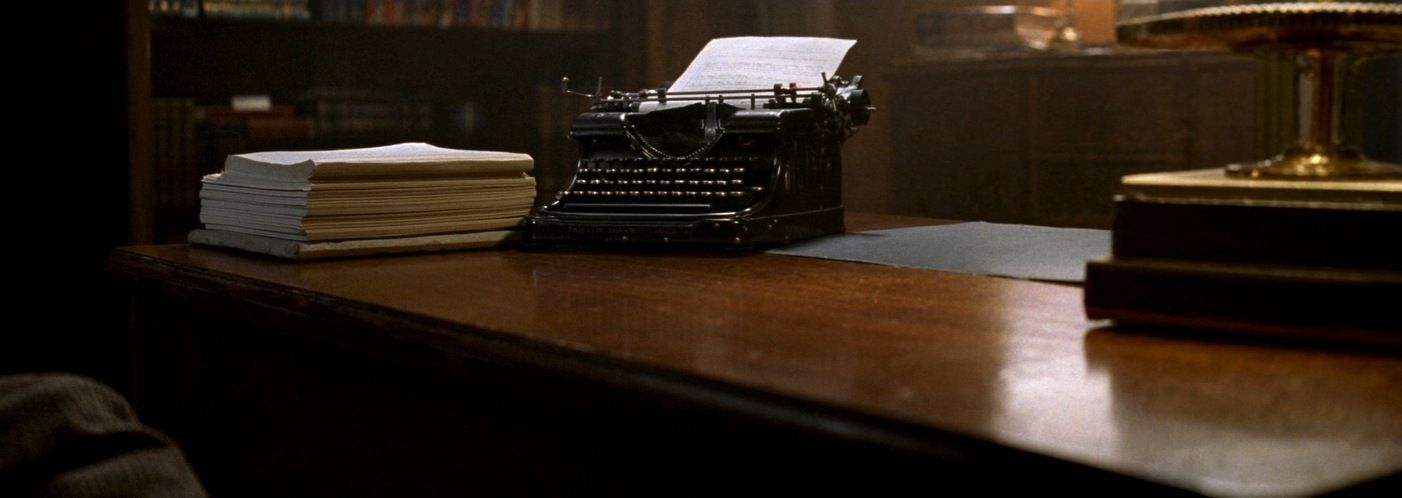
An antique manual typewriter and a stack of typed pages on a desk under a warm lamp

Anita Loos wrote for sixty eight years. Lasting is the craft.

Anita Loos sold her first scenario to Biograph for twenty five dollars. Her third one got made. It was called The New York Hat, D. W. Griffith directed it, and Mary Pickford and Lionel Barrymore starred in it. She was in her early twenties.

Then Griffith put her on staff, which made her the first woman staff screenwriter in Hollywood. That's the fact everybody repeats, and it's the least interesting thing about her.

Between 1912 and 1915 she wrote a hundred and five scripts, and nearly every one of them got produced. Not optioned. Not developed. Produced. She wrote the intertitles for Intolerance. In 1925 she published Gentlemen Prefer Blondes, which started as magazine sketches, became a surprise bestseller, and ended up in fourteen languages.

And then she kept going. She was still working in 1980. She died in 1981 at ninety three. Sixty eight years.

Being first is timing and somebody's open door. Lasting is the craft. Anybody can have one good year. She had seven decades of them, through silents, through sound, through the studio system rising and collapsing around her, writing novels and plays when the screenwriting work changed.

Women writers were told to be grateful. Loos walked through the door and outlasted everyone.

One more thing, and I'll let you decide what to do with it. In 1973, at eighty five, she told the London Observer: “I'm furious about the Women's Liberationists. They keep getting up on soapboxes and proclaiming that women are brighter than men. That's true, but it should be kept very quiet or it ruins the whole racket.”

You don't have to agree with her. I'm not sure I do. But that's a woman who'd been inside this business for sixty years, joking about power with her feet up, never once asking permission to be there.
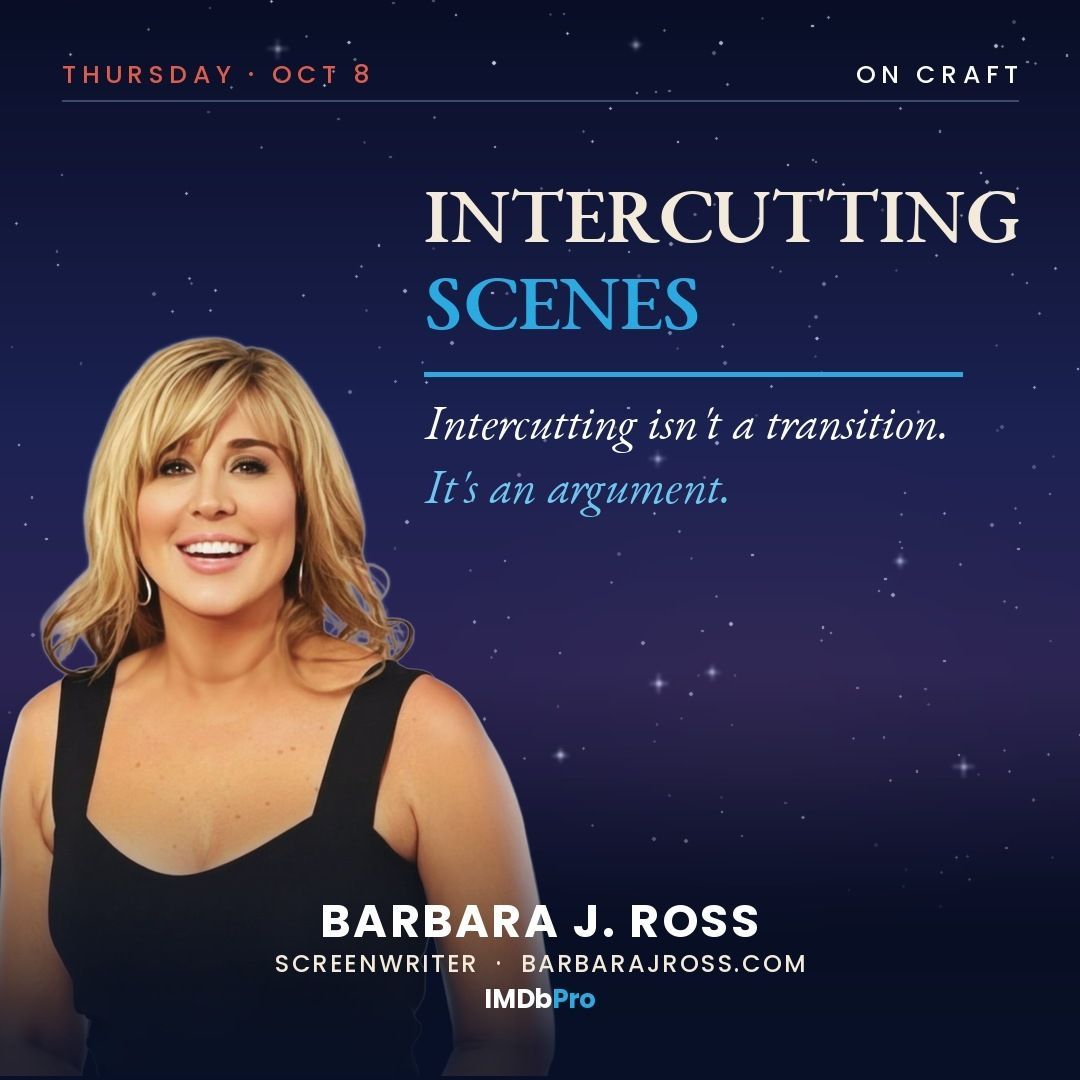
Social card for the post, screenwriter Barbara J. Ross beside the headline Intercutting Scenes
By Barbara J. Ross • October 8, 2026
An intercut is not a transition. Three questions that tell you whether you have one, with The Godfather and The Silence of the Lambs as proof.
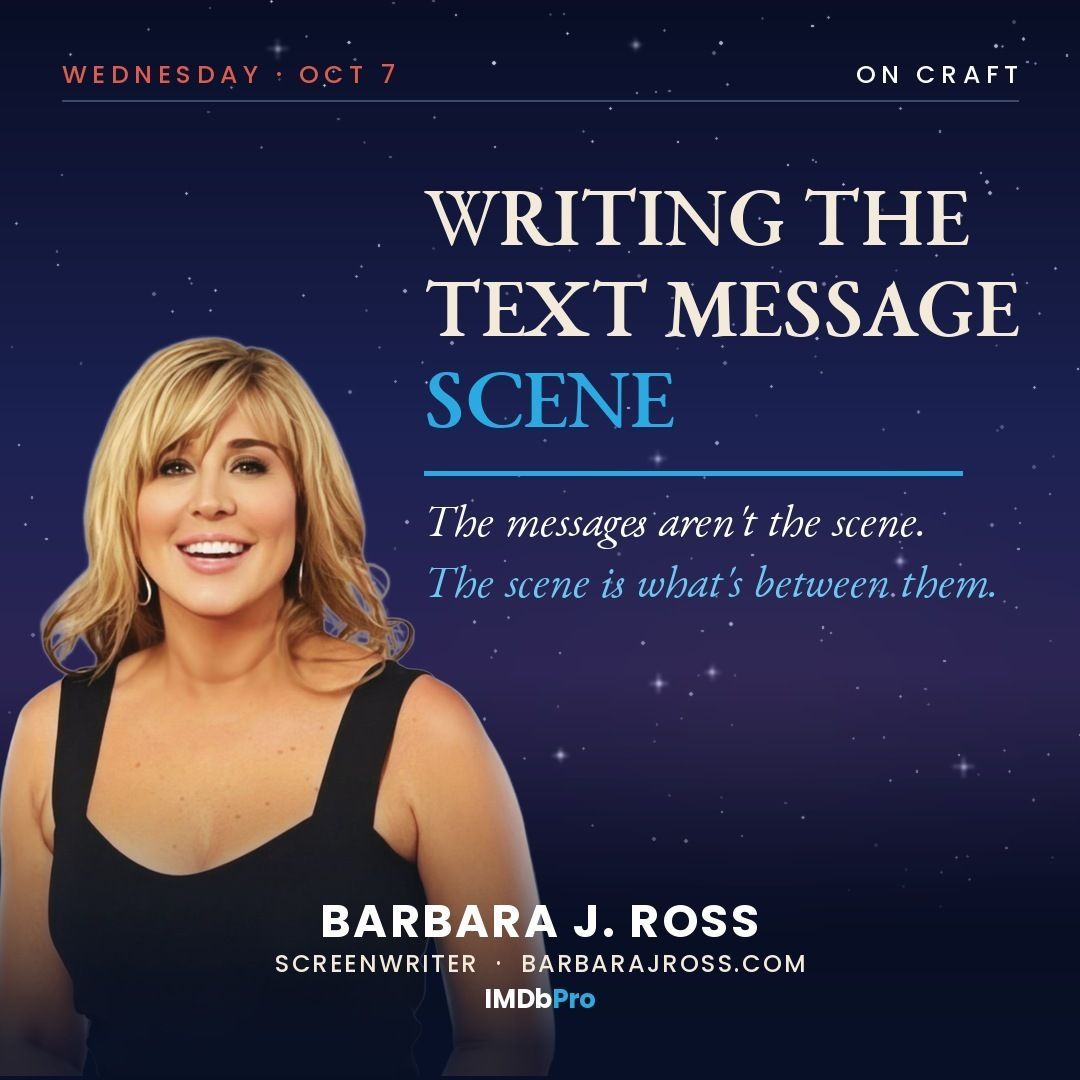
Social card for the post, screenwriter Barbara J. Ross beside the headline Writing the Text Message
By Barbara J. Ross • October 7, 2026
Text scenes fail when you write the transcript. Write the gap instead: the typing indicator, the delete, the message nobody answers.
Social card for the post, screenwriter Barbara J. Ross beside the headline The Oldest Thing in the F
By Barbara J. Ross • October 5, 2026
Your opening scene is the oldest thing in the file. Four questions to ask it, with The Godfather and Sunset Boulevard as the working examples.
Social card for the post, screenwriter Barbara J. Ross beside the headline Do You Pay the Sales Agent and the Distributor?
By Barbara J. Ross • October 5, 2026
Part two on film sales: when a sales agent commissions the license fee, when a distributor's margin is already priced in, and where the fees stack.
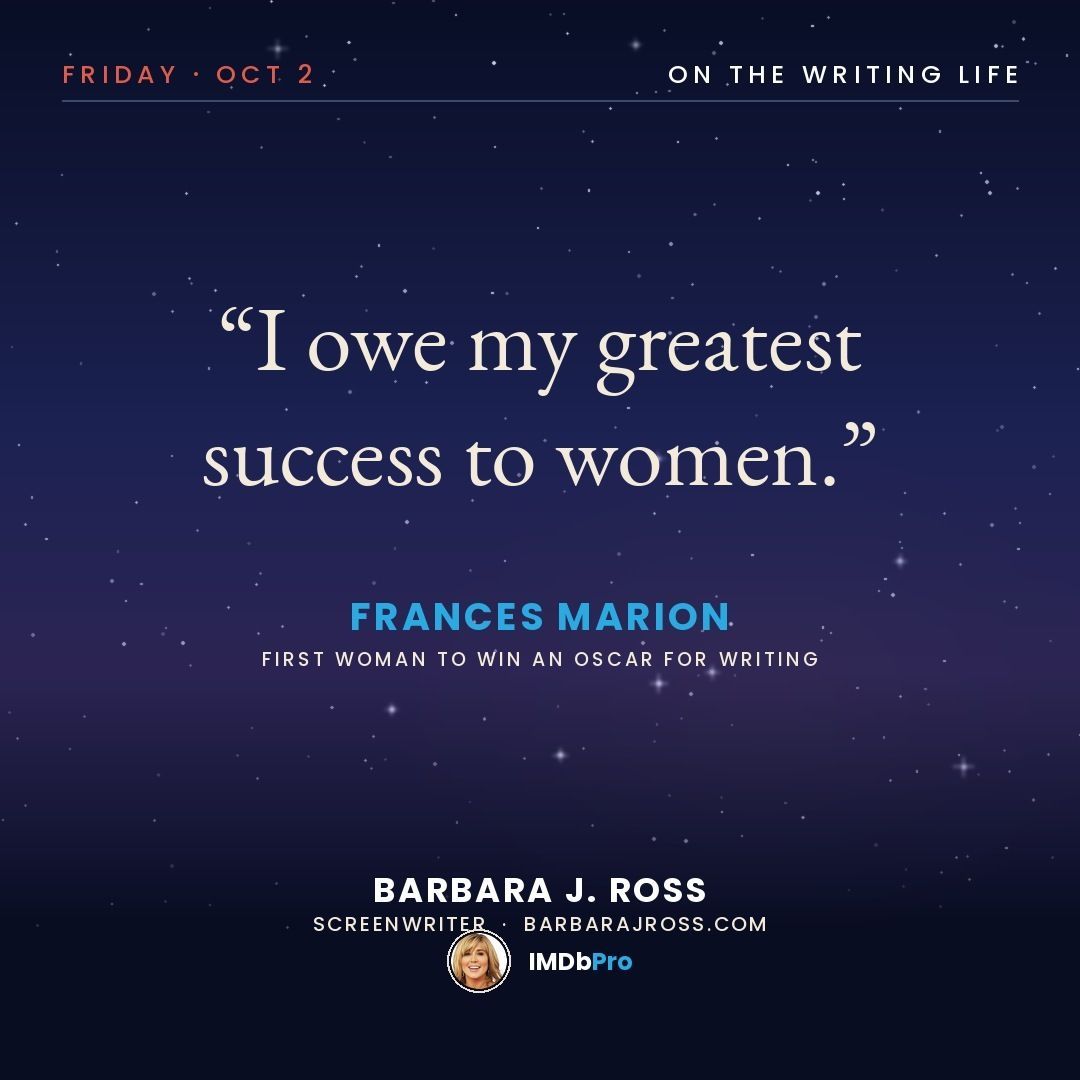
Quote card reading I owe my greatest success to women, Frances Marion, with a photo of screenwriter Barbara J. Ross
By Barbara J. Ross • October 2, 2026
Frances Marion was the highest paid screenwriter in Hollywood and the first woman to win an Oscar for writing. A woman gave her the first job.
Social card reading One Finds the Buyer, One Is the Buyer, with a photo of screenwriter Barbara J. Ross
By Barbara J. Ross • October 1, 2026
A sales agent works for you. A distributor is the buyer. Calling the wrong one first costs first-time filmmakers real money.
Social card reading 35% of Everything Except You, with a photo of screenwriter Barbara J. Ross
By Barbara J. Ross • September 30, 2026
California’s film credit now pays up to 35% on a $750 million pool. Writers are non-qualified spend, and here is why that still matters.
Social card reading NDA or Not to NDA, with a photo of screenwriter Barbara J. Ross
By Barbara J. Ross • September 29, 2026
Almost nobody will sign a writer’s NDA. What a submission release actually says, and where to protect the work instead.
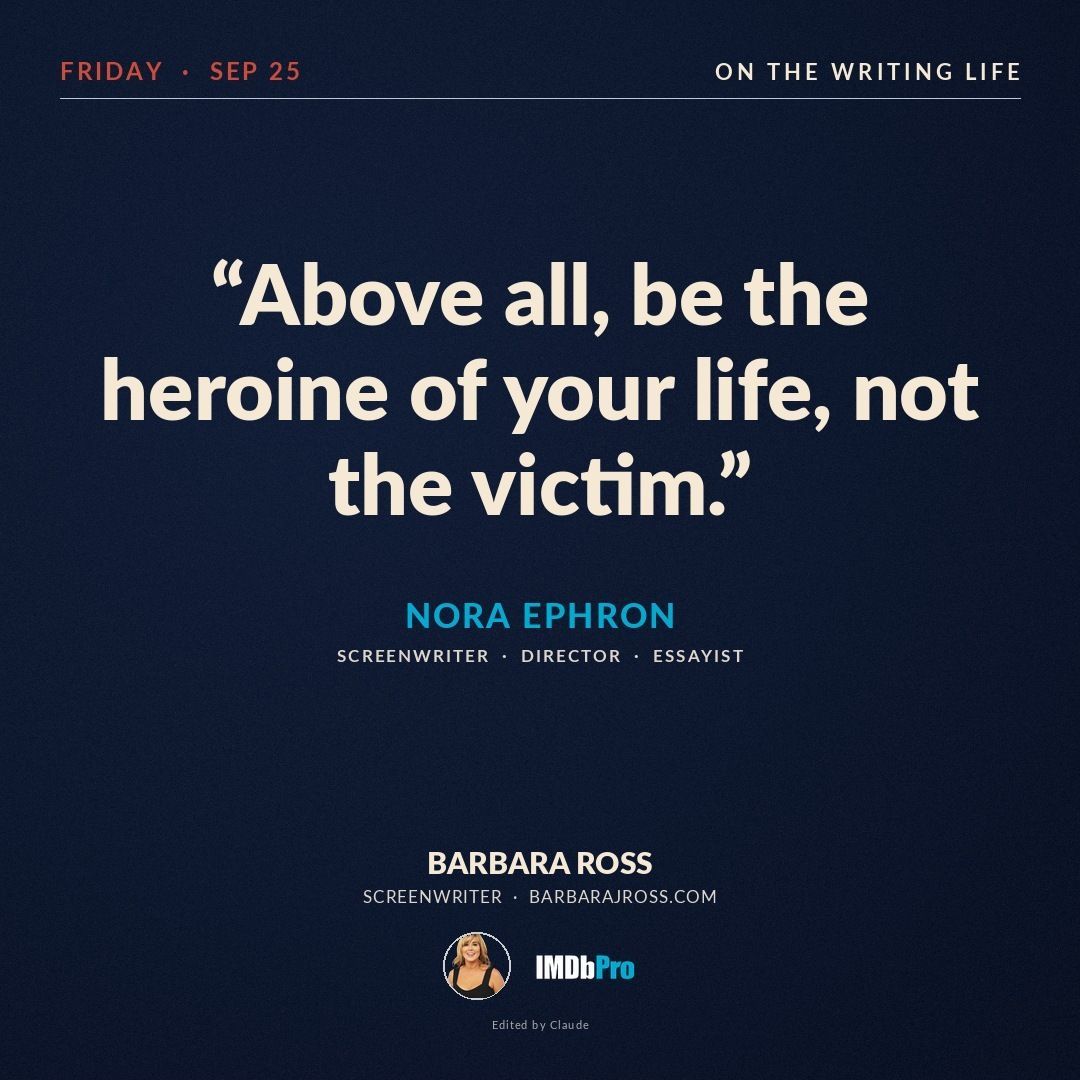
Quote card: Above all, be the heroine of your life, not the victim - Nora Ephron, on the Barbara J. Ross screenwriting blog
By Barbara J. Ross • September 25, 2026
Nora Ephron told Wellesley graduates to be the heroine, not the victim. For screenwriters, that line is a business instruction, not a sentiment.
Light blue blog card reading Ticking Clocks, tagged On Screenwriting, with a photo of Barbara J. Ross
By Barbara J. Ross • September 24, 2026
A ticking clock is a deadline the audience can count. Not a mood, a number that gets smaller while they watch. A deadline with no consequence is a calendar.
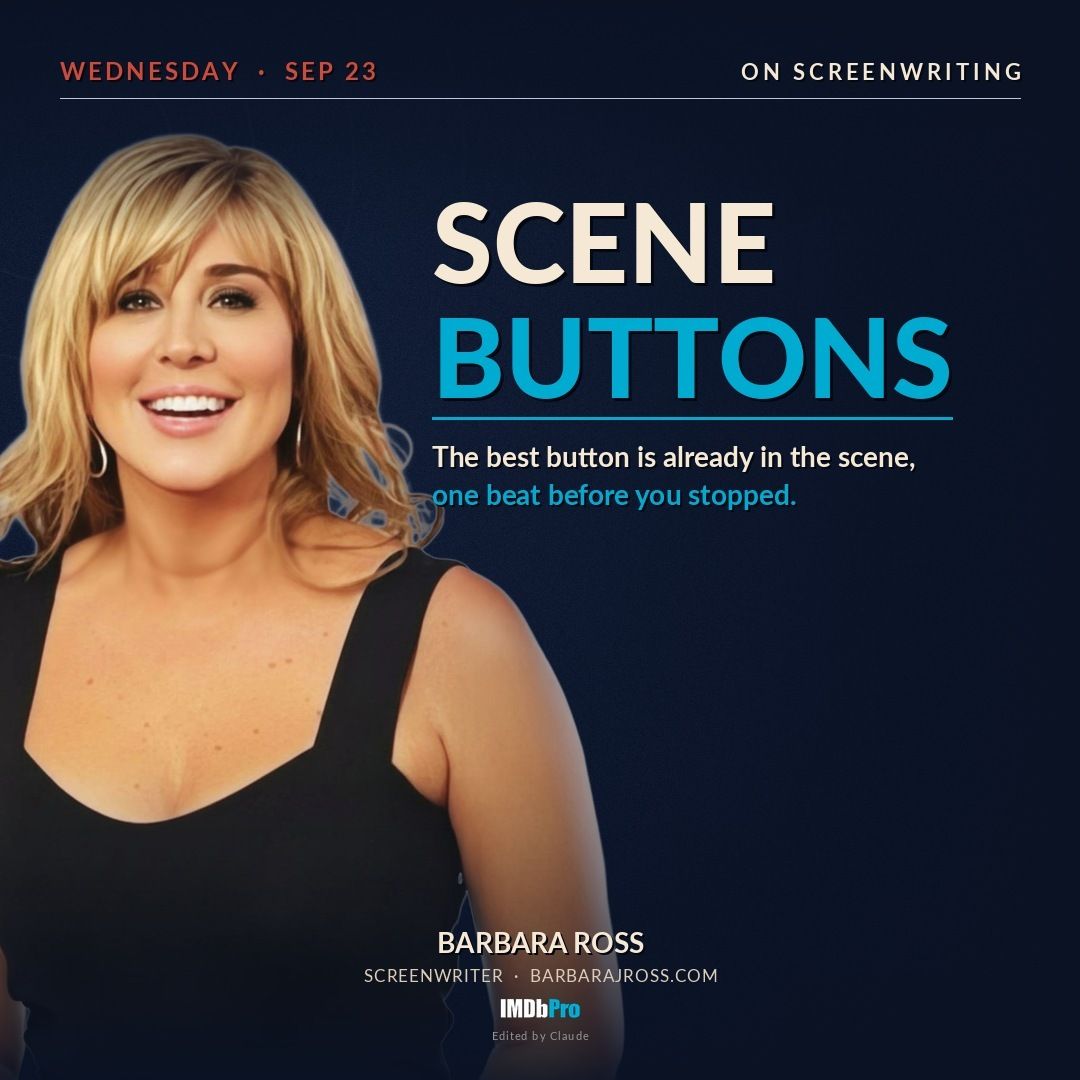
Light blue blog card reading Scene Buttons, tagged On Screenwriting, with a photo of Barbara J. Ross
By Barbara J. Ross • September 23, 2026
A button is the last beat of a scene, the line that makes the cut feel decided. The best one is already in the scene, one beat before you stopped.
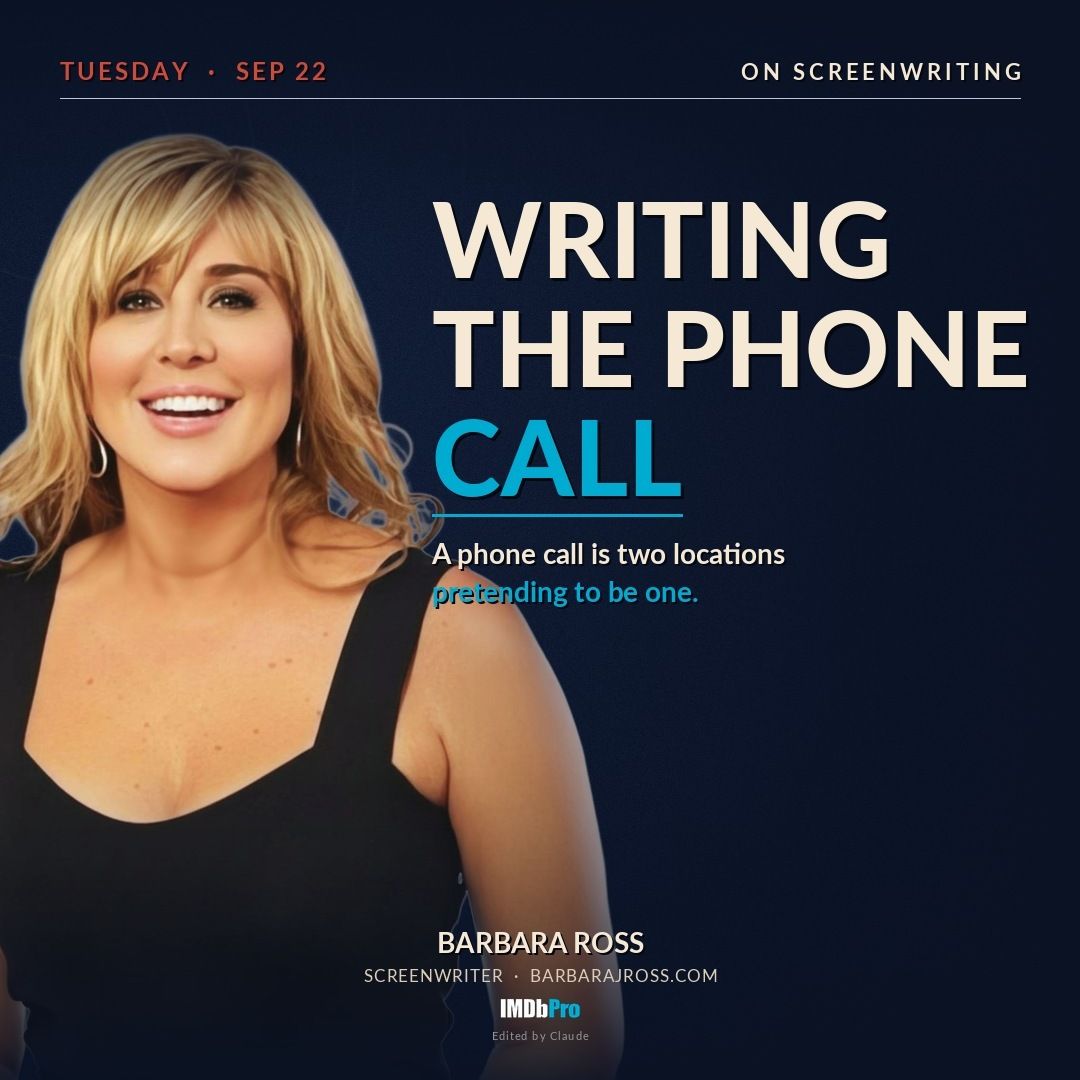
Light blue blog card reading Writing the Phone Call, tagged On Screenwriting, with a photo of Barbar
By Barbara J. Ross • September 22, 2026
A phone call takes away everything you usually use. It's only half a scene, and you write the other half: what each person does, and what each one can't see.
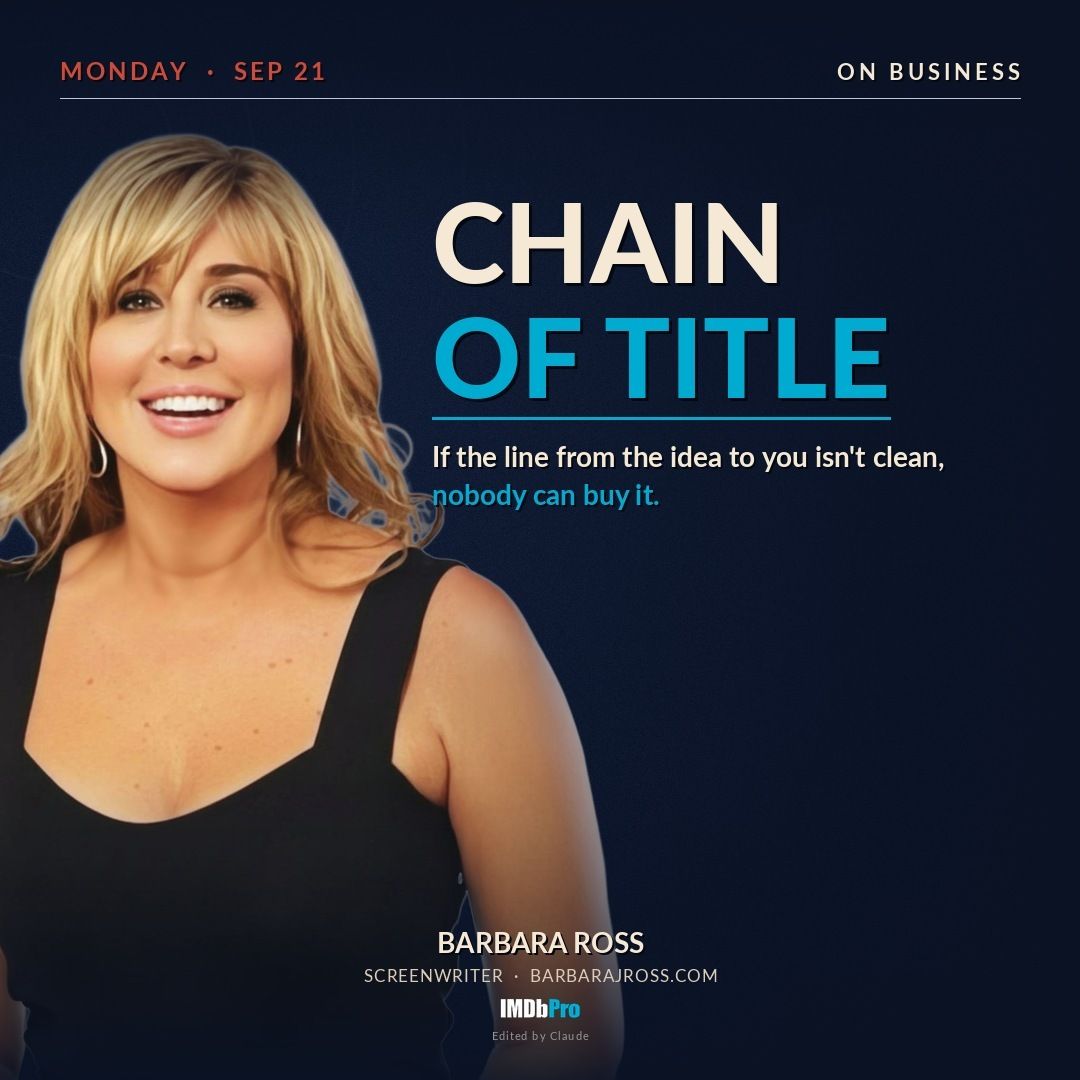
Light blue blog card reading Chain of Title, tagged On Business, with a photo of screenwriter Barbar
By Barbara J. Ross • September 21, 2026
Chain of title is the paper trail that proves who owns the story. If a lawyer can't draw a clean line from the idea to you, the script can't be bought.
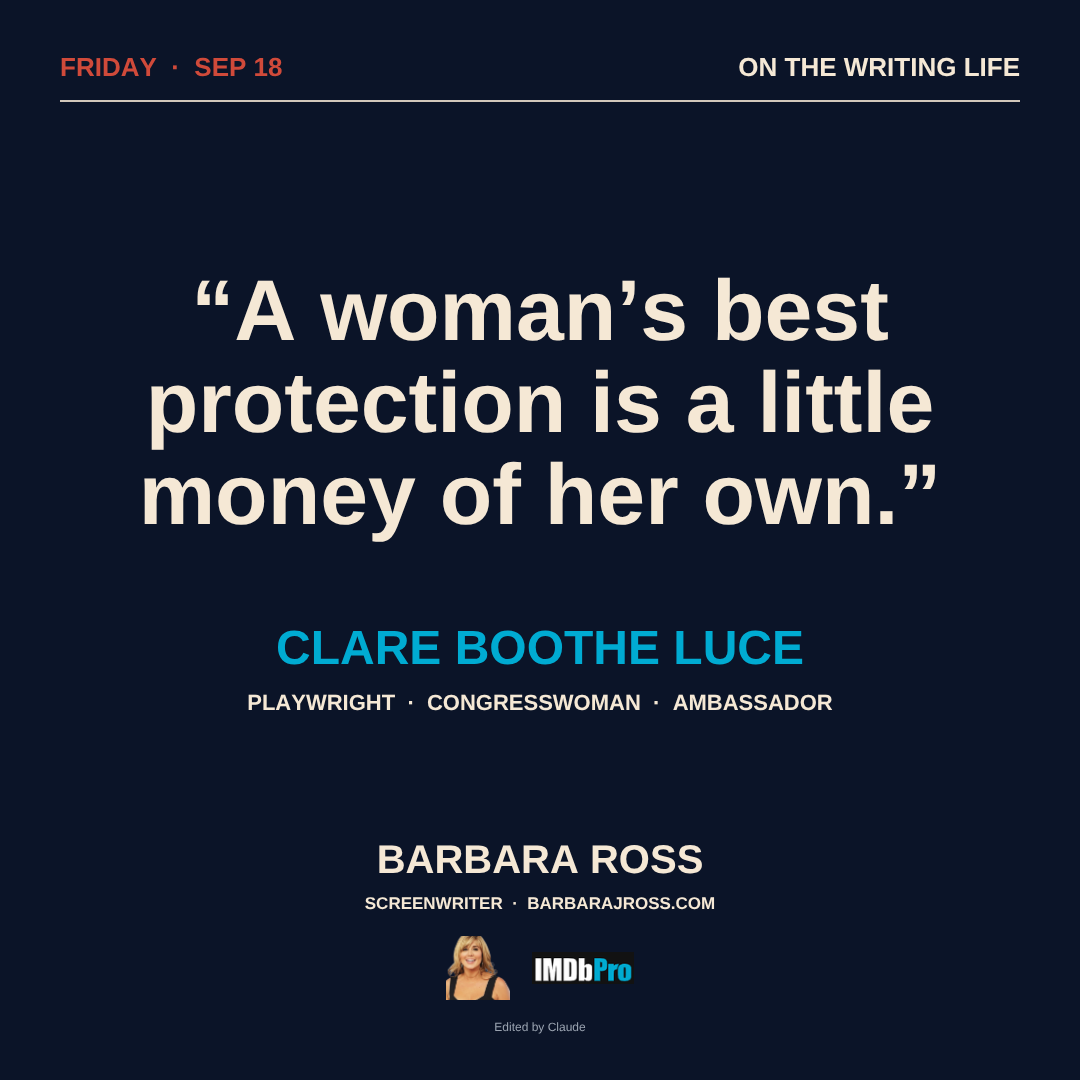
Dark blue quote card reading A woman's best protection is a little money of her own, credited to Cla
By Barbara J. Ross • September 18, 2026
Clare Boothe Luce knew what it took to get into those rooms. Having your own money isn't about being rich. It's about being able to say no and to walk out.
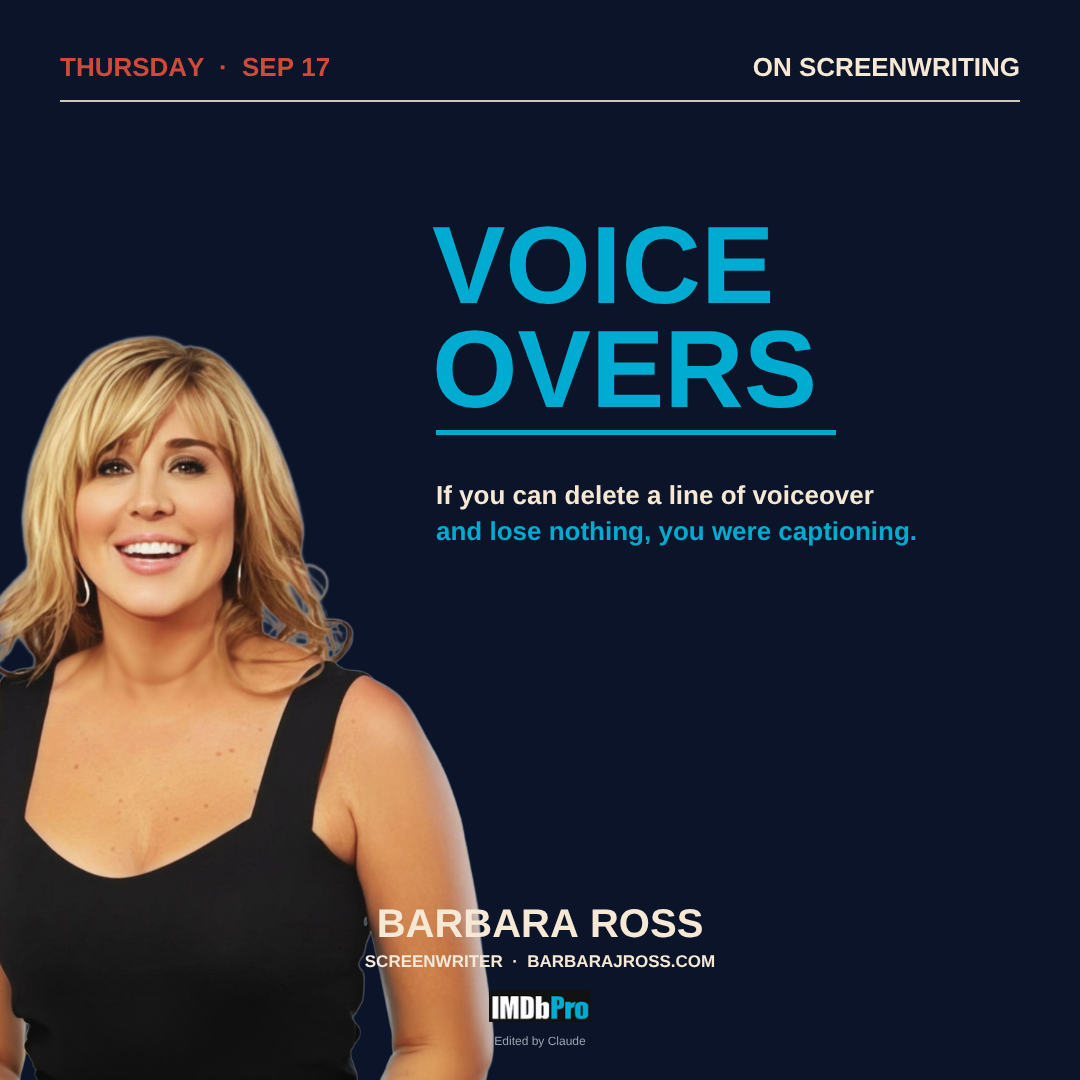
Blog card reading Voiceovers, with a photo of screenwriter Barbara Ross on a dark blue background
By Barbara J. Ross • September 17, 2026
Voiceover isn't cheating, but captioning the frame is. Goodfellas and Sunset Boulevard show the difference, and one test tells you which one you wrote.
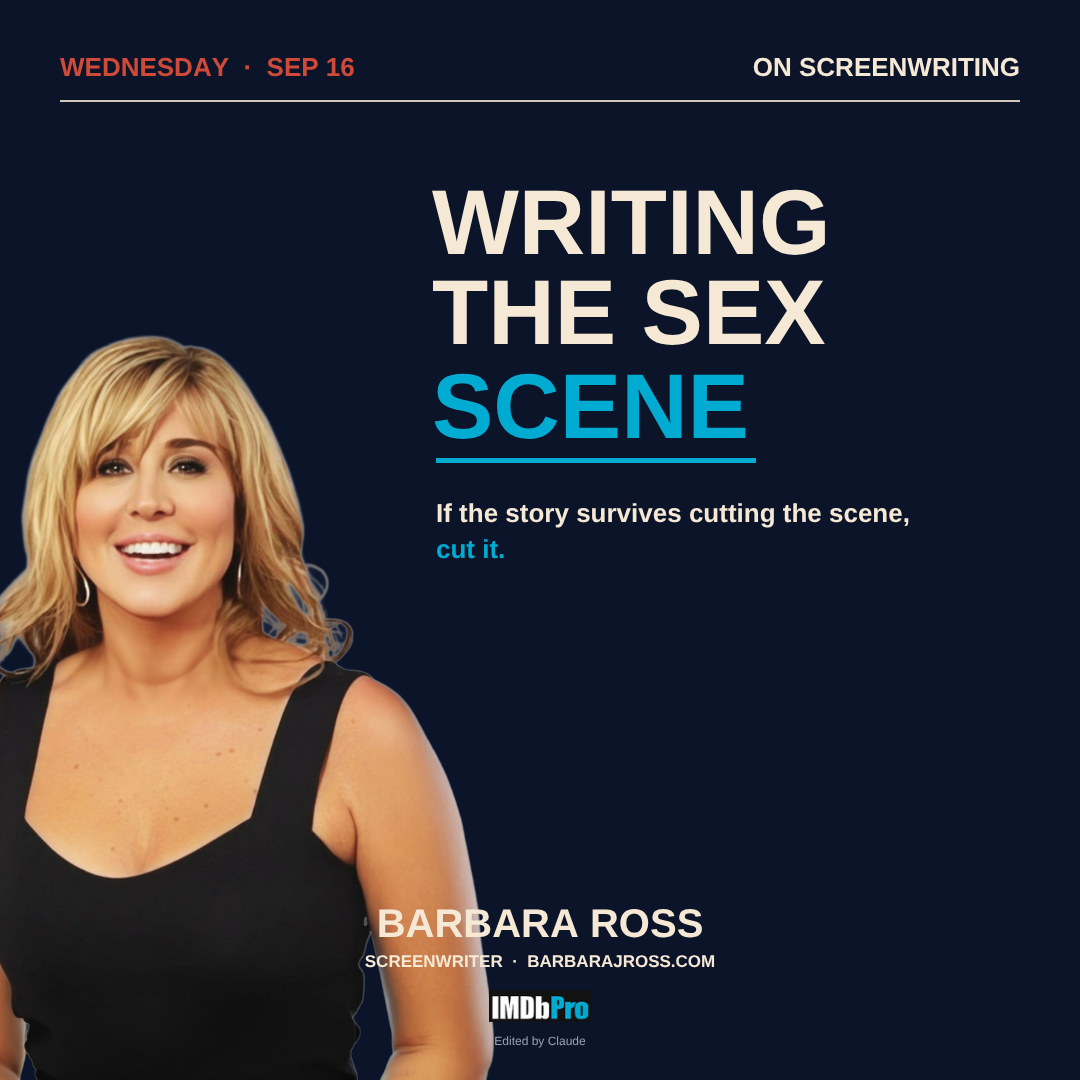
Blog card reading Writing the Sex Scene, with a photo of screenwriter Barbara Ross on a dark blue ba
By Barbara J. Ross • September 16, 2026
The good sex scenes are negotiations. Write the decision, not the choreography, and remember the agent and the line producer read the pages too.
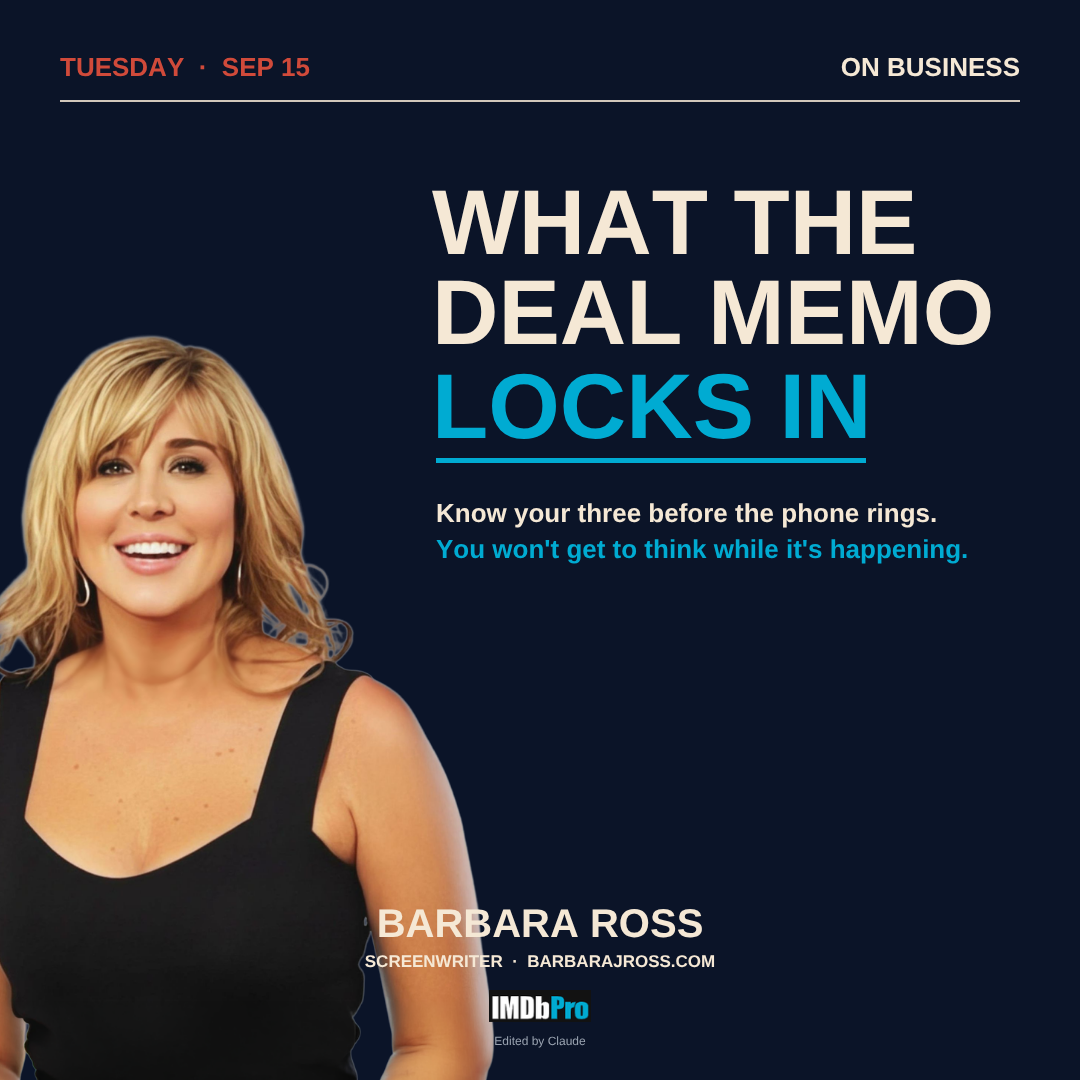
Blog card reading What the Deal Memo Locks In, with a photo of screenwriter Barbara Ross on a dark b
By Barbara J. Ross • September 15, 2026
The deal memo takes an afternoon and the lawyers argue from it for a year. Credit, rewrite steps, bonus triggers, reversion: know your three before the call.
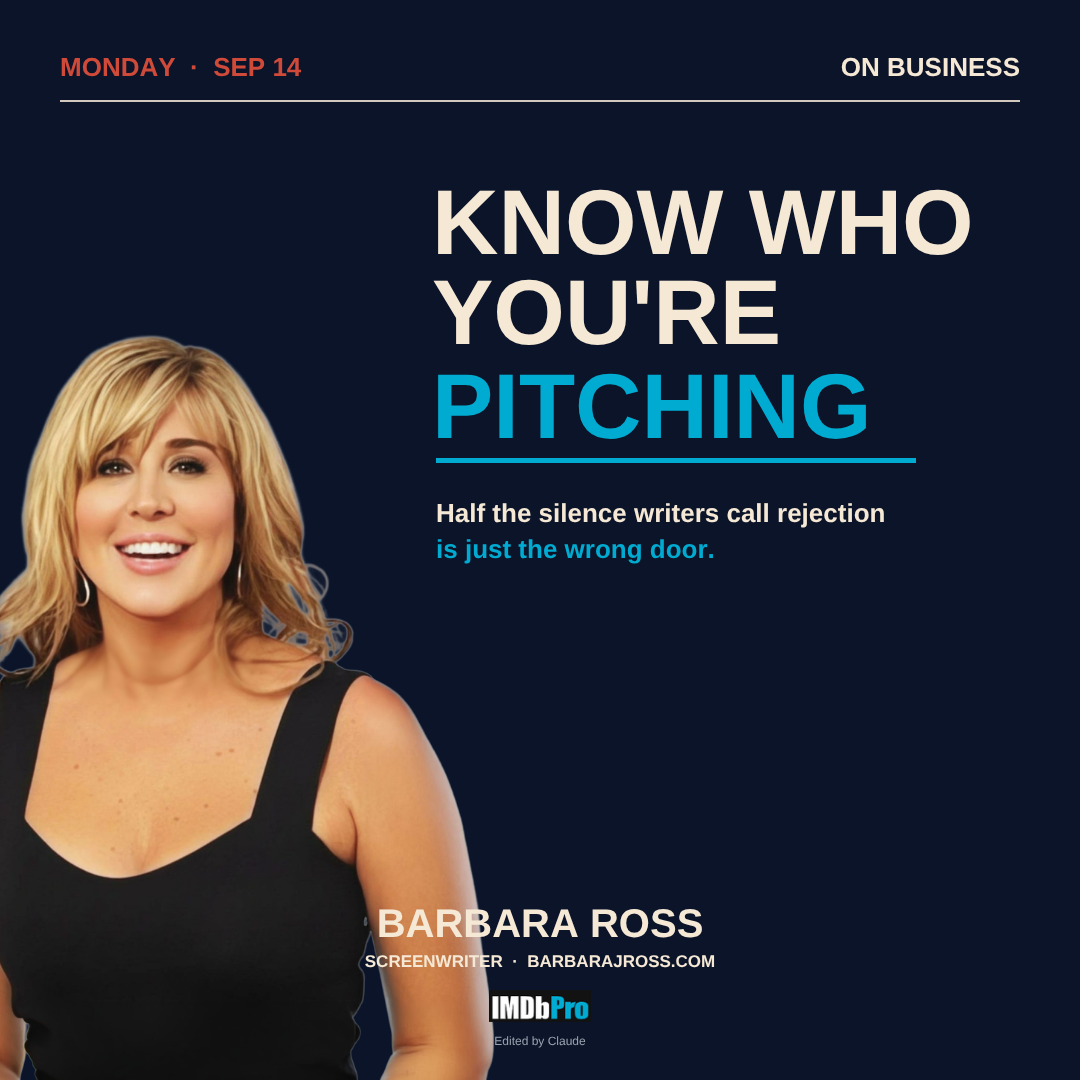
Blog card reading Know Who You're Pitching, with a photo of screenwriter Barbara Ross on a dark blue
By Barbara J. Ross • September 14, 2026
Lenders don't buy scripts. Fifteen minutes of research tells you whether the name on your desk is equity or debt, and whether your pitch has any chance.
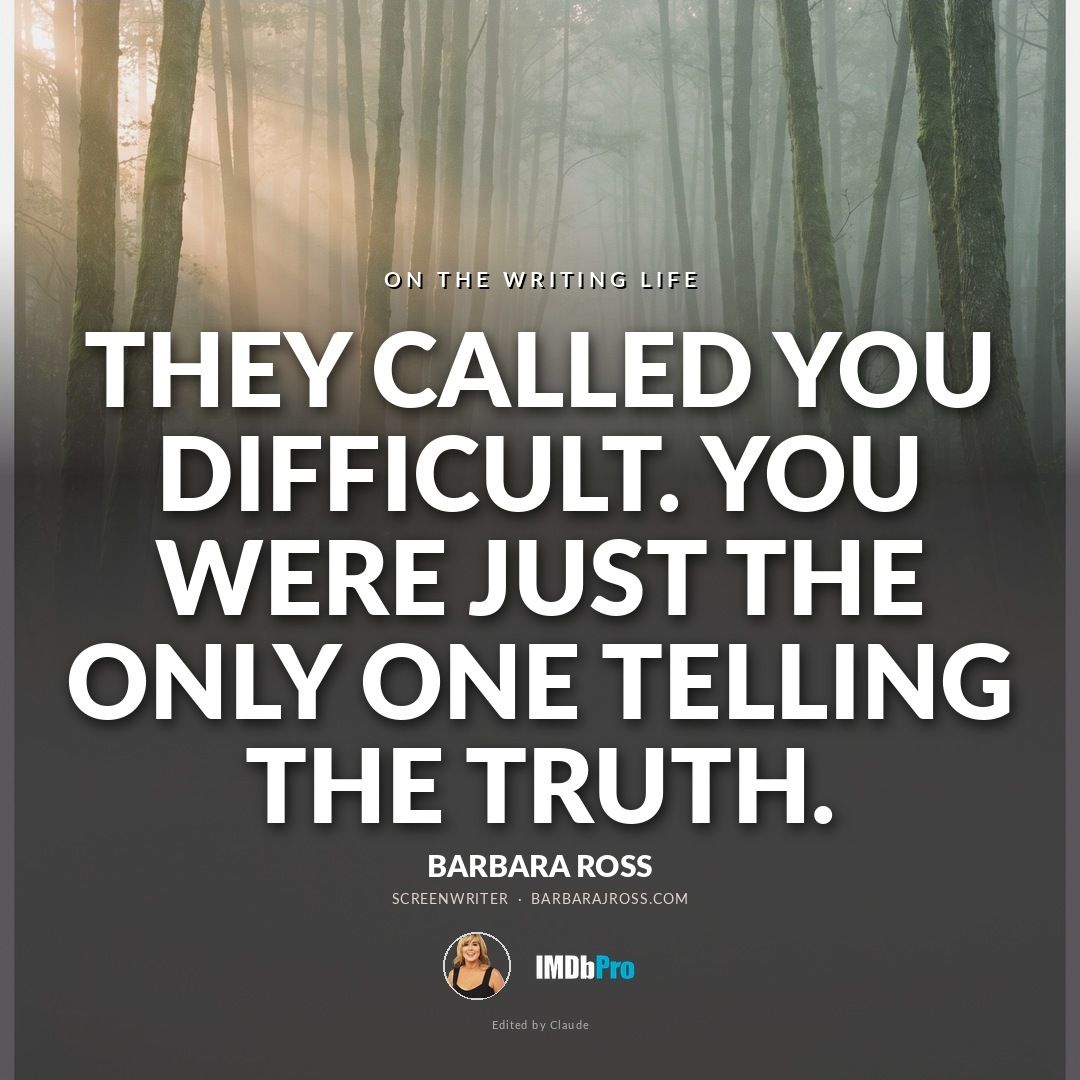
Quote card reading They called you difficult, you were just the only one telling the truth, by Barbara J. Ross
By Barbara J. Ross • September 11, 2026
Difficult is what they call you when you ask who is paying and want the credit in writing. It describes the inconvenience, not your temperament.
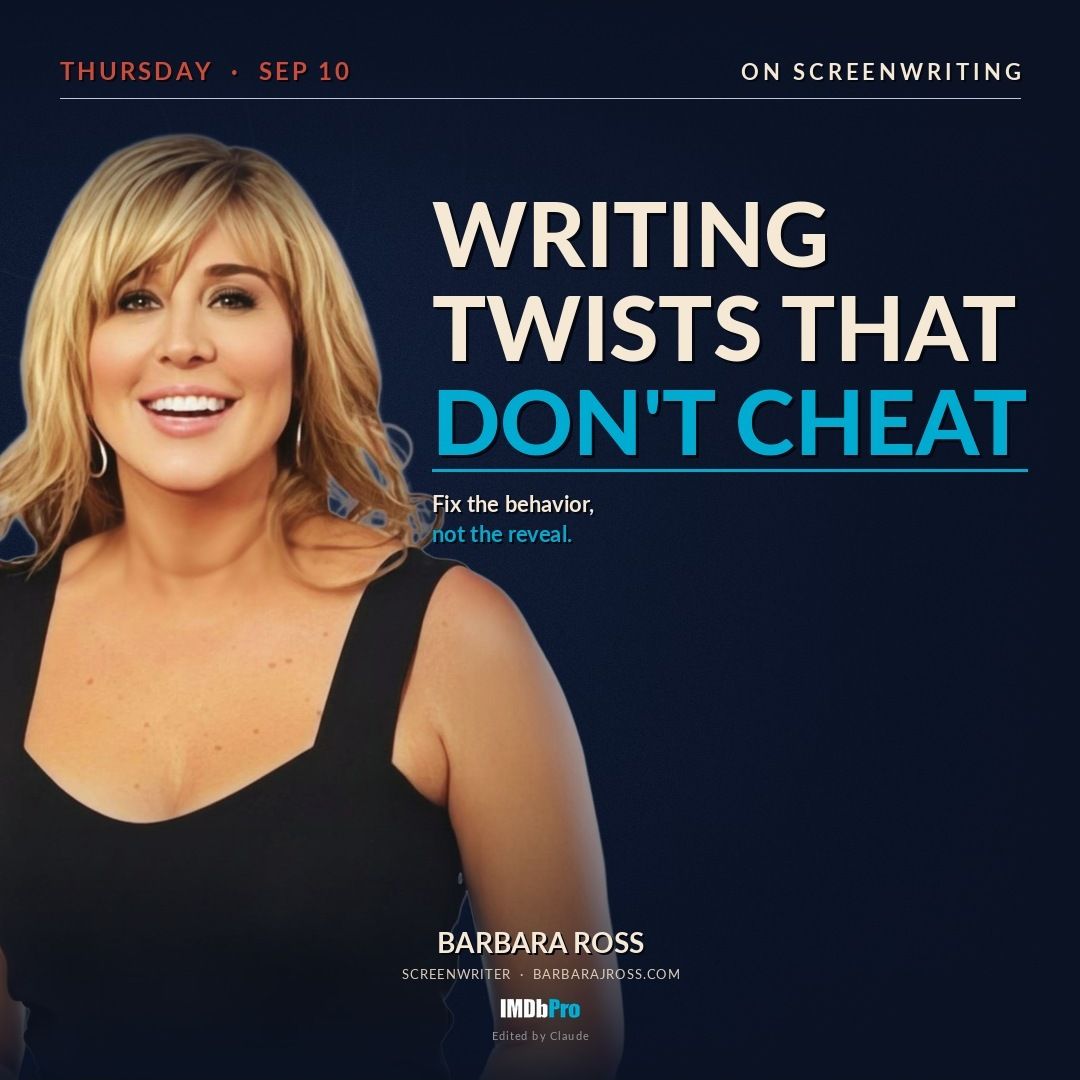
Social card reading Writing Twists That Don't Cheat, with a photo of screenwriter Barbara J. Ross
By Barbara J. Ross • September 10, 2026
Withheld information is not a twist, it is a trick. A real twist uses what the audience already had and shows them they read it wrong.
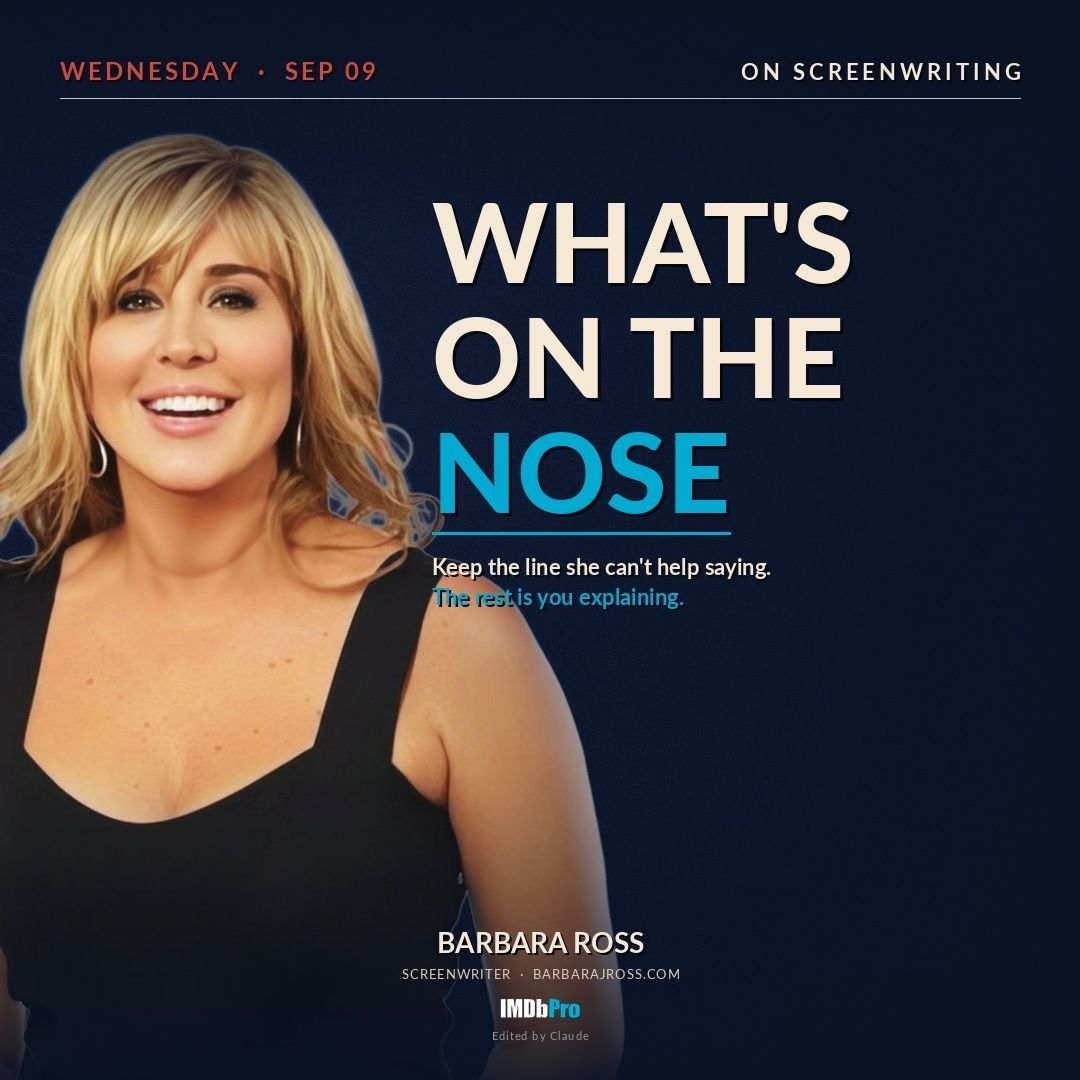
Social card reading What's On the Nose, with a photo of screenwriter Barbara J. Ross
By Barbara J. Ross • September 9, 2026
On-the-nose dialogue kills a scene because it leaves the audience nothing to do. The fix is not vagueness. It is giving the character something else to want.
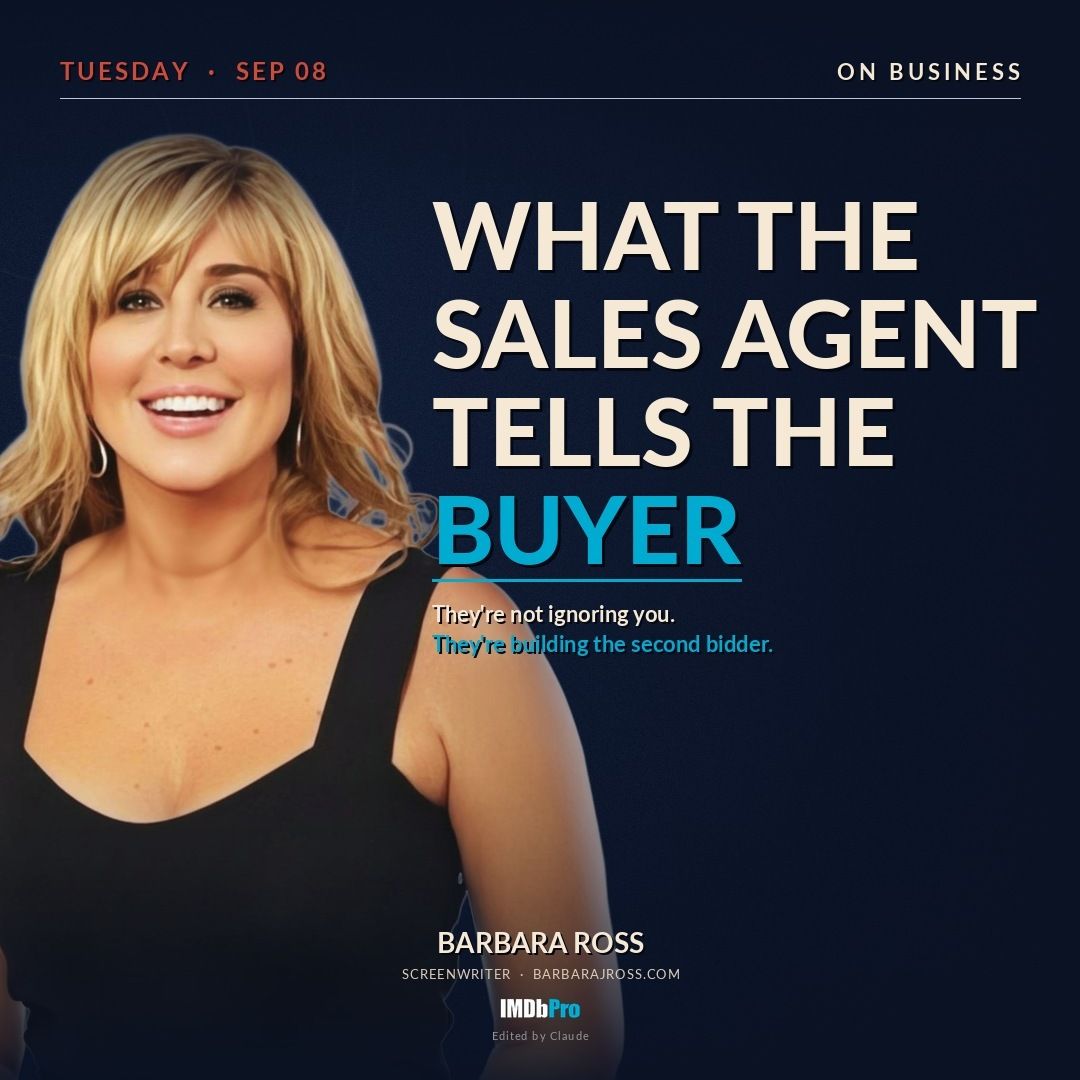
Social card reading What the Sales Agent Tells the Buyer, with a photo of screenwriter Barbara J. Ross
By Barbara J. Ross • September 8, 2026
The buyer asks who else is looking. That answer, not your draft, is what moves the number. What agents are really managing is scarcity.
Social card reading Tax Credits Producers Chase, with a photo of screenwriter Barbara J. Ross
By Barbara J. Ross • September 7, 2026
Georgia pays up to 30 percent back on qualified spend. That credit decides where your movie shoots, often before anyone reads your pages.
Quote card reading They told you it was too emotional, it was just true, by Barbara J. Ross
By Barbara J. Ross • September 4, 2026
Too emotional is the note you get when the scene is working and the room is uncomfortable. Keep the line. Cut the three around it that explain it.
Social card reading The Flashback That Earns an Interruption, with a photo of screenwriter Barbara J. Ross
By Barbara J. Ross • September 3, 2026
A flashback that only explains is a footnote. The one that works takes something the audience already watched and makes it mean the opposite.
Social card reading The Character Who Only Says Yes, with a photo of screenwriter Barbara J. Ross
By Barbara J. Ross • September 2, 2026
A character whose job is to agree cannot generate a scene. Give her a want that costs your protagonist something, or cut her lines entirely.
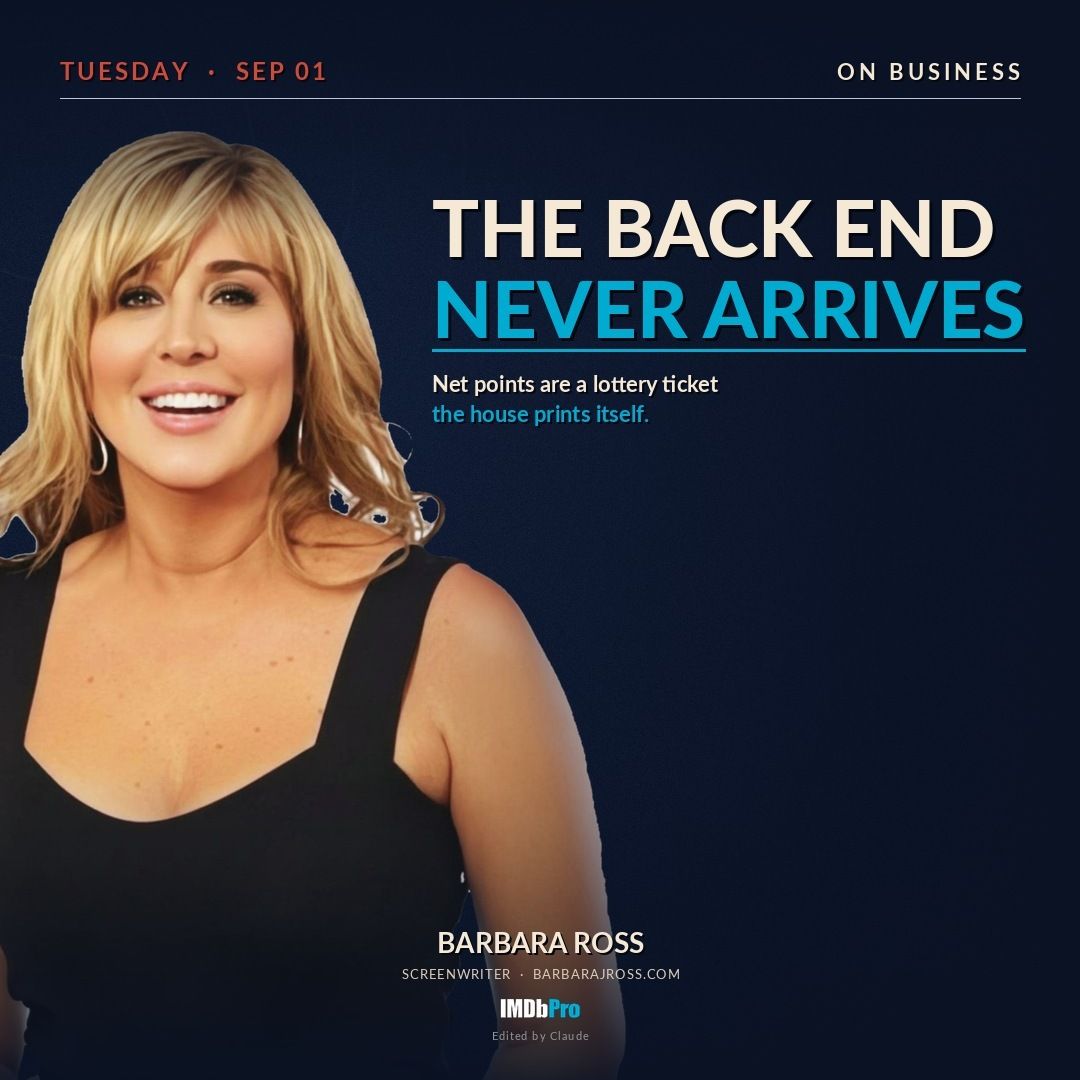
Social card reading The Back End Never Arrives, with a photo of screenwriter Barbara J. Ross
By Barbara J. Ross • September 1, 2026
Net profit is a defined term written by the people who have to pay it. Negotiate fixed compensation, production bonuses and gross-defined escalators instead.
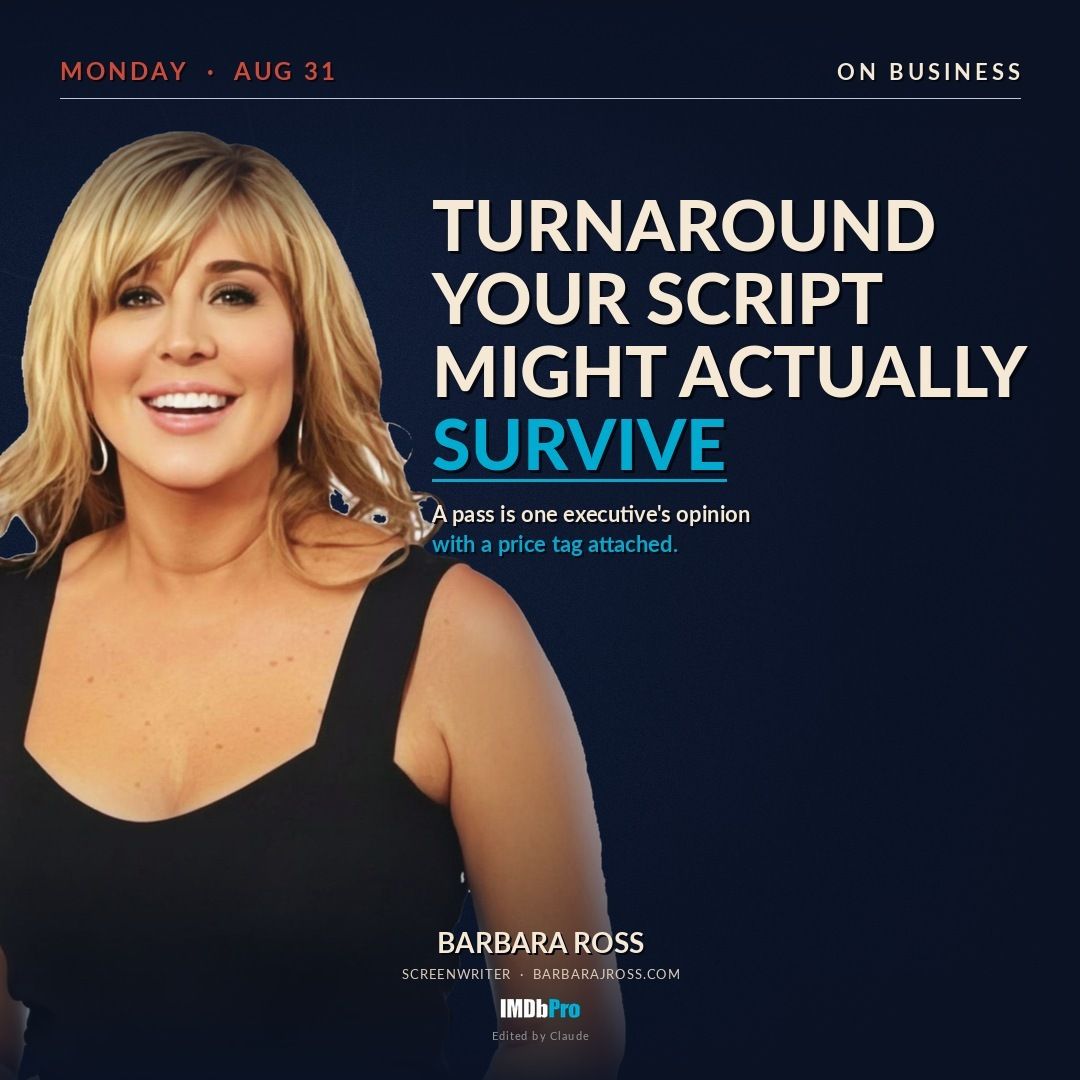
Social card reading Turnaround Your Script Might Actually Survive, with a photo of screenwriter Barbara J. Ross
By Barbara J. Ross • August 31, 2026
Turnaround is not a death sentence. It is a number the next buyer has to clear before a single new page exists. Columbia put E.T. in turnaround.
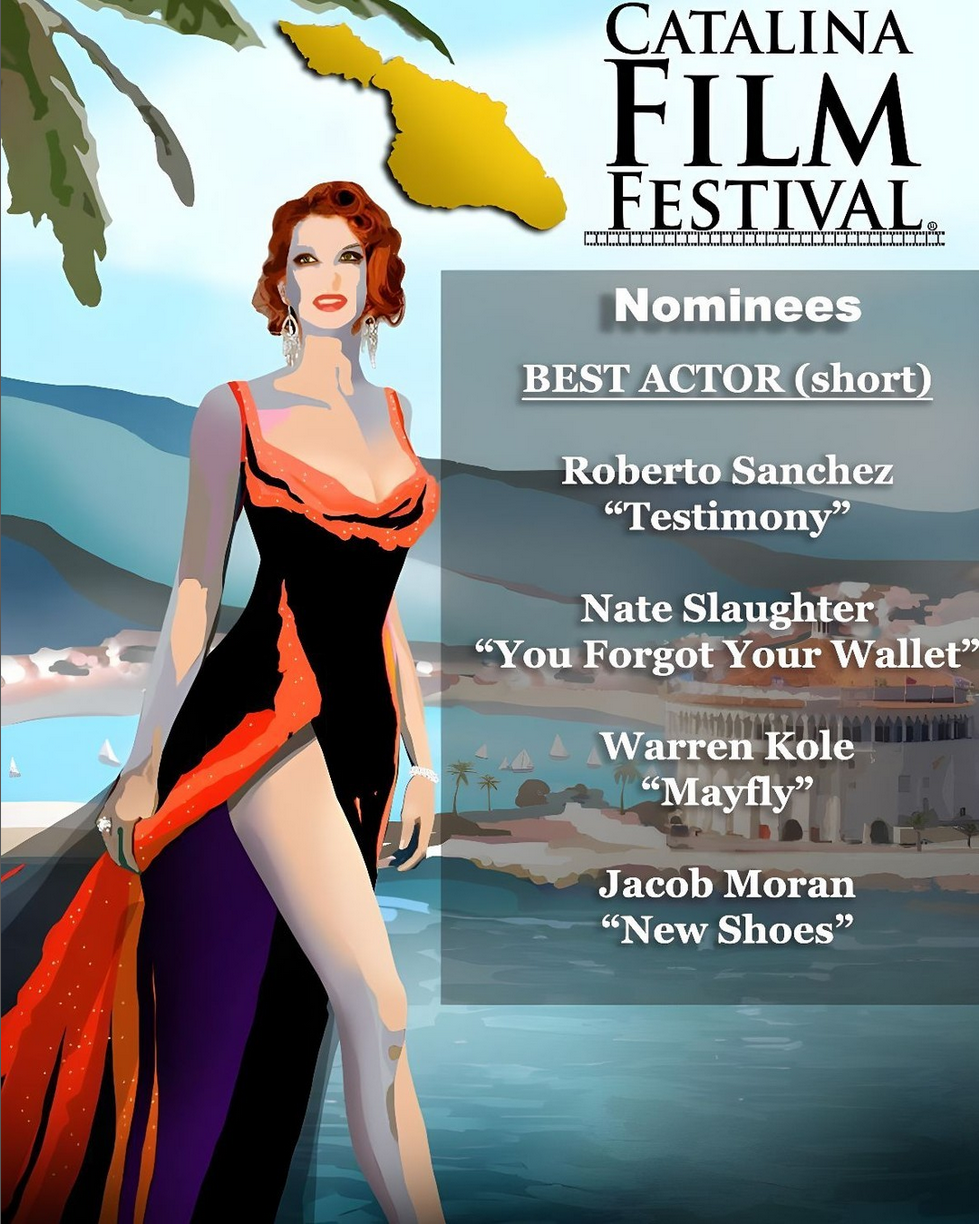
Catalina Film Festival poster: an illustrated woman in a red gown beside the Best Actor nominees
By Barbara J. Ross • October 3, 2023
At B Story Media, I go to film festivals to meet writers, producers and industry insiders. Catalina Film Festival is my favorite, and here's why.
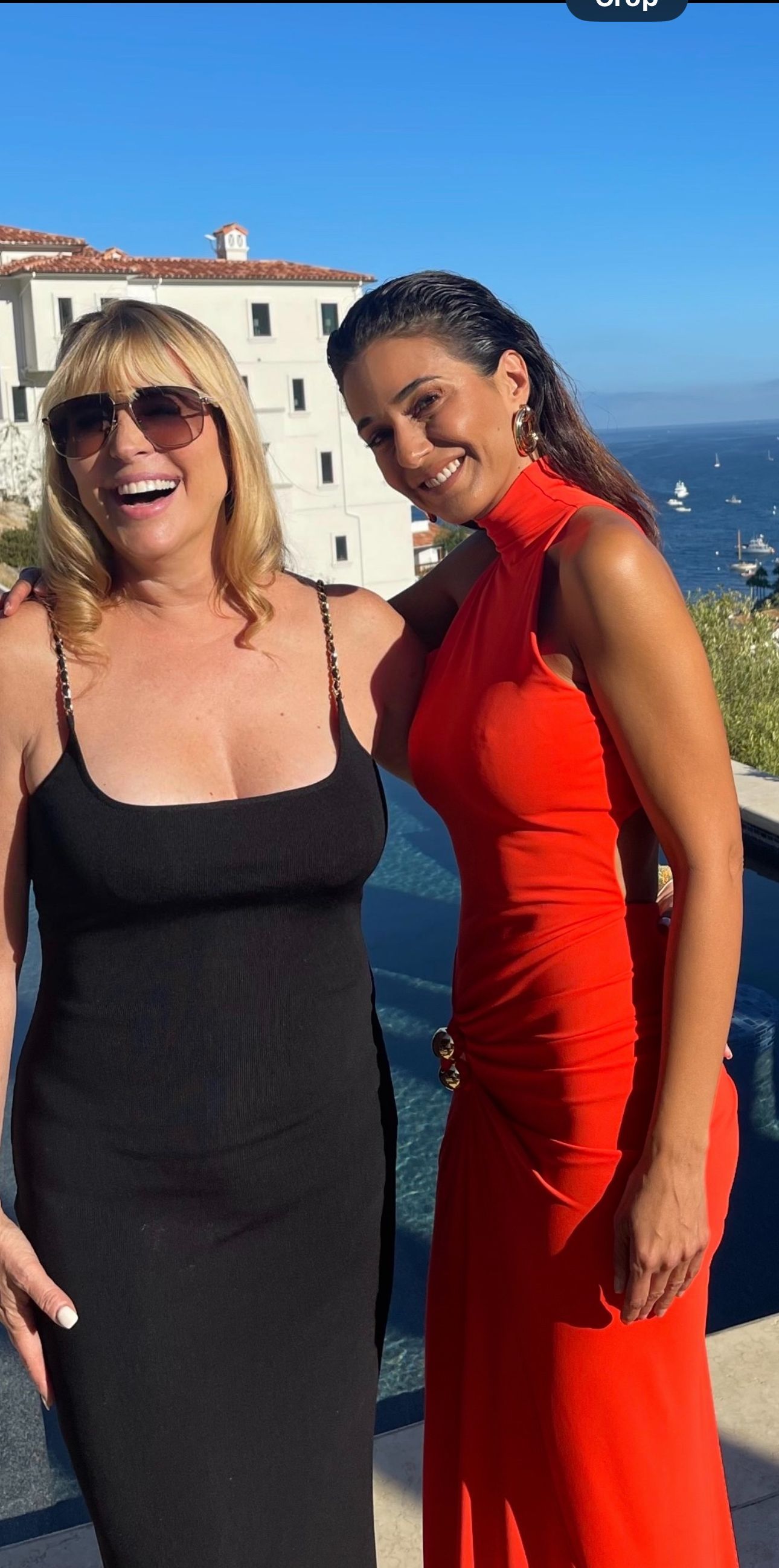
Barbara J. Ross and a friend in a red dress laughing by the ocean
By Barbara J. Ross • May 22, 2023
Networking is hard for an introvert, but it's part of a writer's life. Here's how I prepare for writers' events, break the ice and follow up afterward.
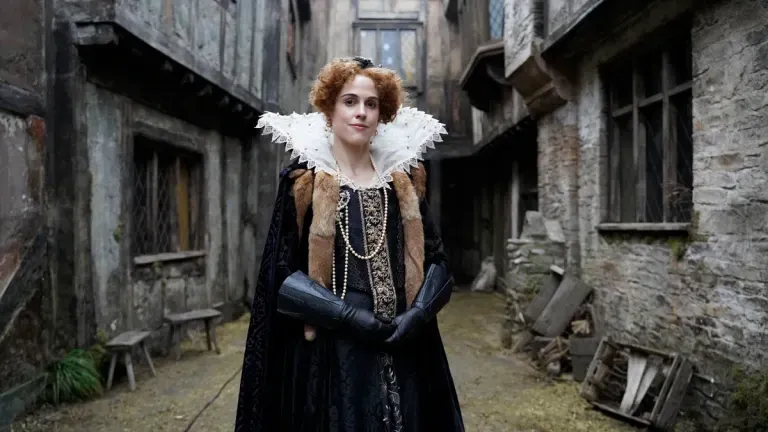
A woman in an Elizabethan gown and ruff collar stands in a stone alley in A Discovery of Witches
By Barbara J. Ross • April 26, 2023
Lighting, framing, editing and color grading shape a scene's mood and subtext. Here's why I think screenwriters should write with the camera in mind.
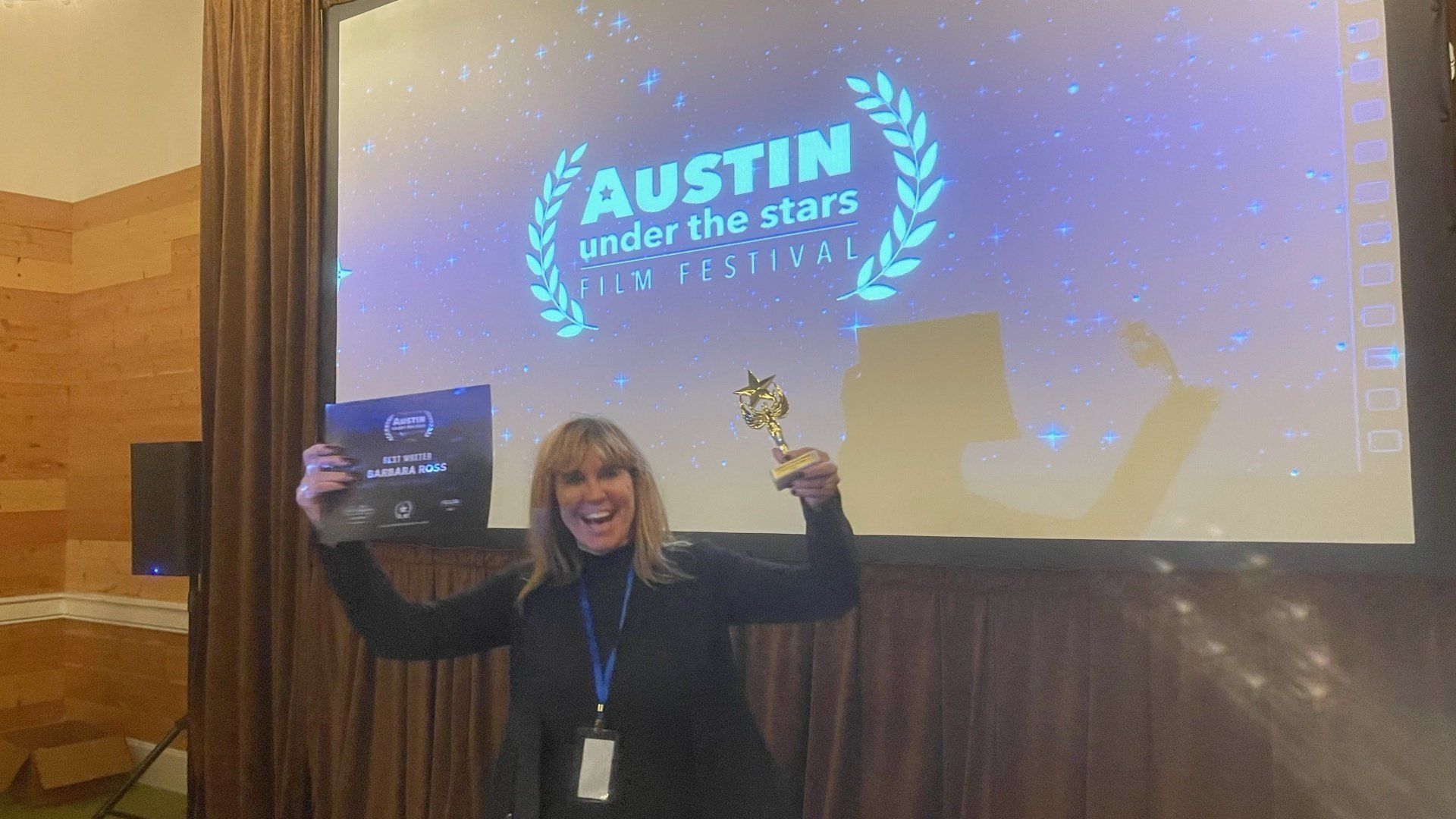
Barbara J. Ross holding her Best Writer trophy at Austin Film Festival Under the Stars
By Barbara J. Ross • December 28, 2021
My rewrite of #WHATNEXT won Best Writer at Austin Film Festival Under the Stars, and the short also took the People's award. What a night!
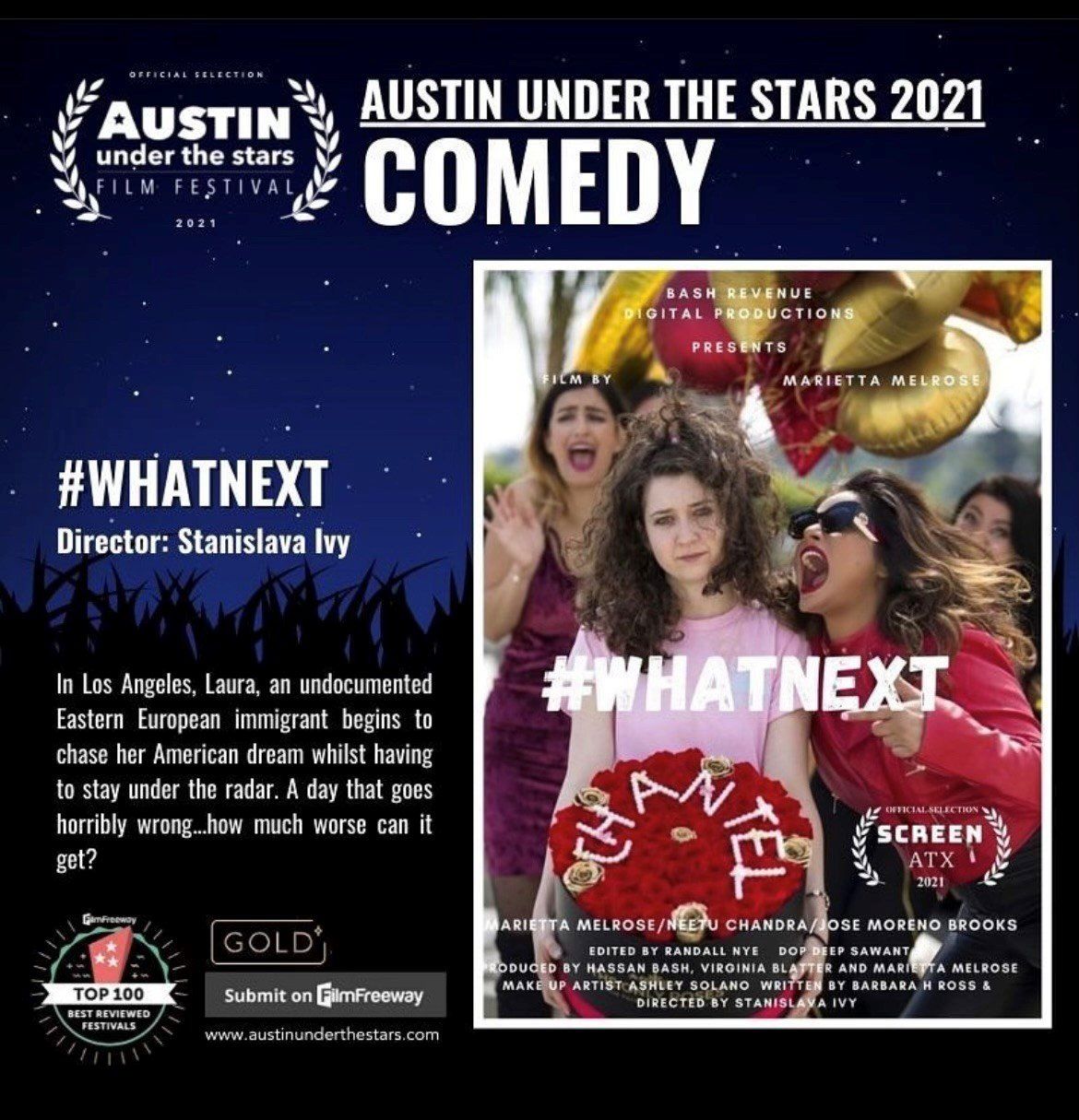
#WHATNEXT poster for Austin Under the Stars 2021, comedy, directed by Stanislava Ivy
By Barbara J. Ross • October 7, 2021
#WHATNEXT, starring Marietta Melrose, was invited to screen at Austin Film Festival Under the Stars. I rewrote the script for this comedy short.
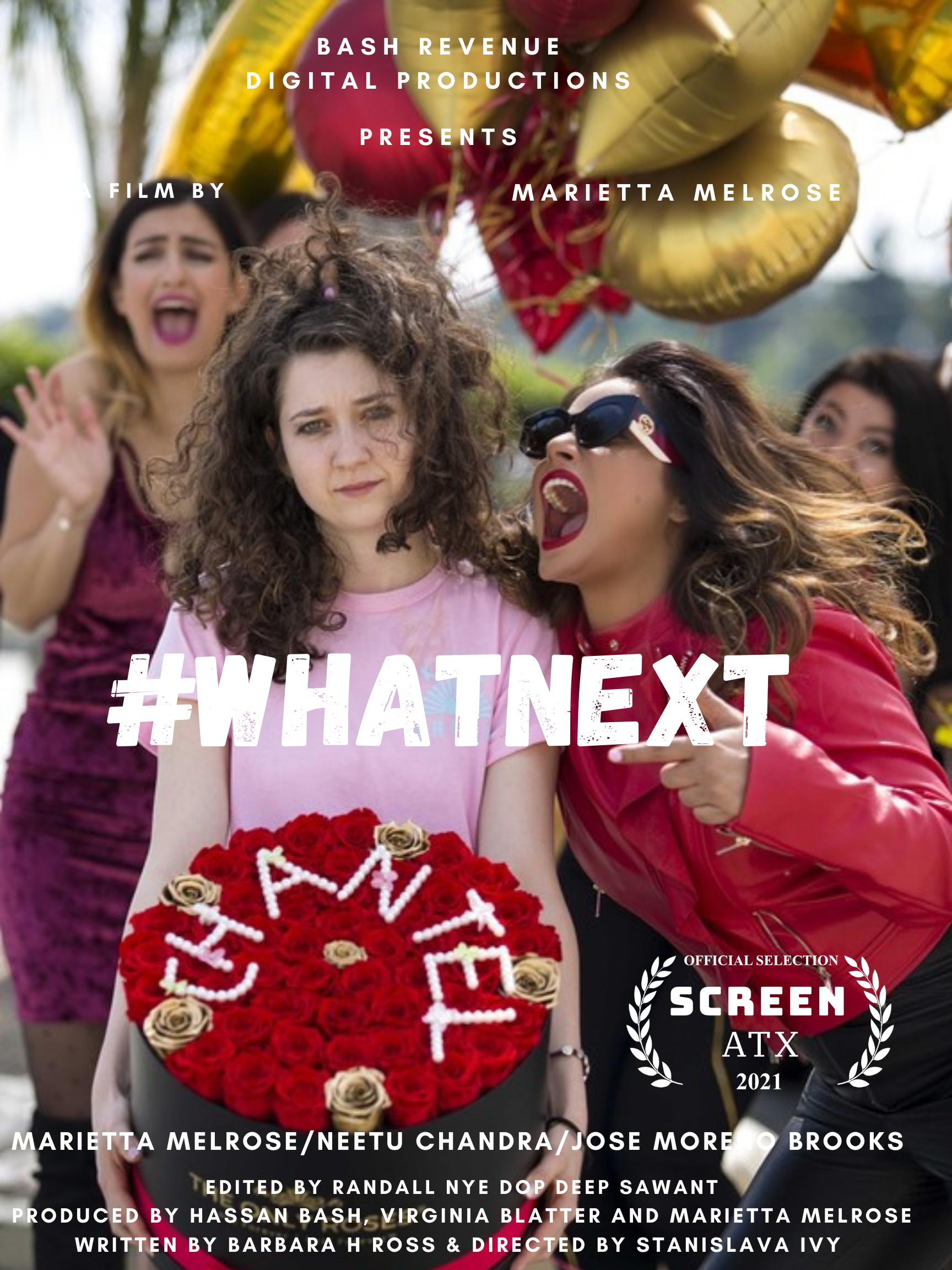
#WHATNEXT poster starring Marietta Melrose, written by Barbara J. Ross, directed by Stanislava Ivy
By Barbara J. Ross • October 7, 2021
I'm so happy for Marietta Melrose: #WHATNEXT was invited to screen at the LA Femme International Film Festival at Regal Cinemas in downtown LA.