Writing the Phone Call
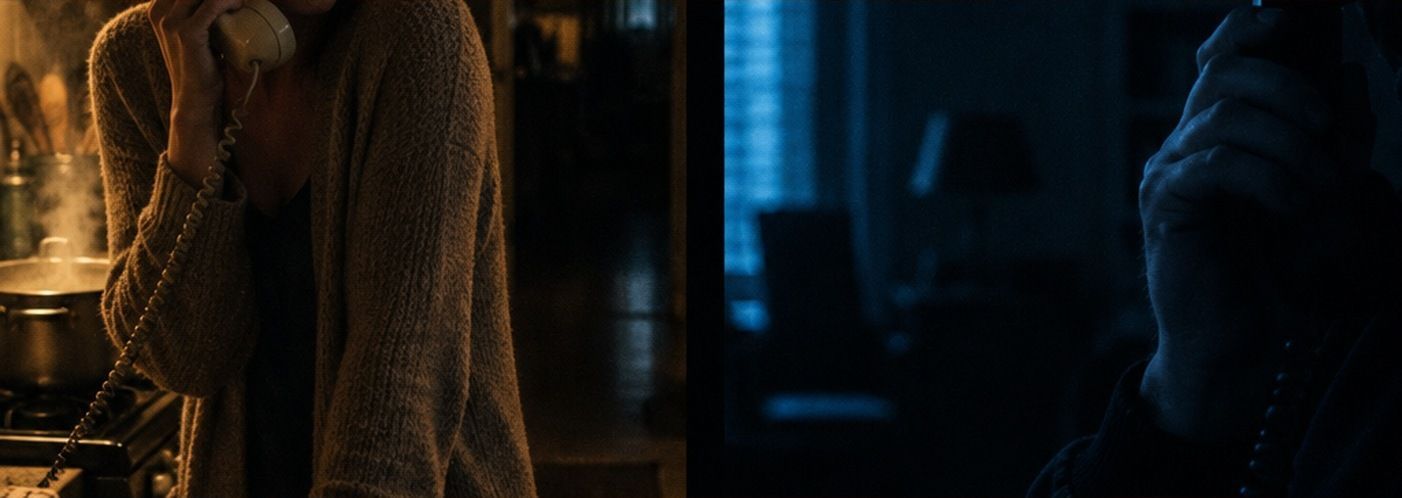
A call is only half a scene. You write the other half.
A phone call takes away everything you usually use. No eye contact. Nobody can cross the room. Neither one can touch the other or walk out. You've got two people in two rooms and dialogue going back and forth, which is why so many phone calls on the page read like an email with quotation marks.
Scream opens with twelve minutes of a girl on the phone. Kevin Williamson gave her a kitchen, a stove, popcorn burning, a door she keeps checking and a knife she picks up. Wes Craven shoots her moving through a house. The voice on the other end has no body at all, and that's why it works. He knows things about a room he isn't standing in.
Then there's what a call does that a face-to-face never can. At the end of The Silence of the Lambs, Ted Tally puts Lecter on a payphone. He's free, he's warm, he's on an island, and Clarice is in a room full of people who just told her she did well. She can't see him. He can see all of it. That gap is the whole scene and you only get it on a phone.
So before you write a word of the dialogue, decide what each person is doing with their hands and what each one can't see. Give one of them a reason to hang up and the other a reason not to let them. Put the call in the middle of something instead of in a quiet room where your character has nothing to do but talk.
A phone call is two locations pretending to be one. Write both.