The Woman Who Wrote Hollywood
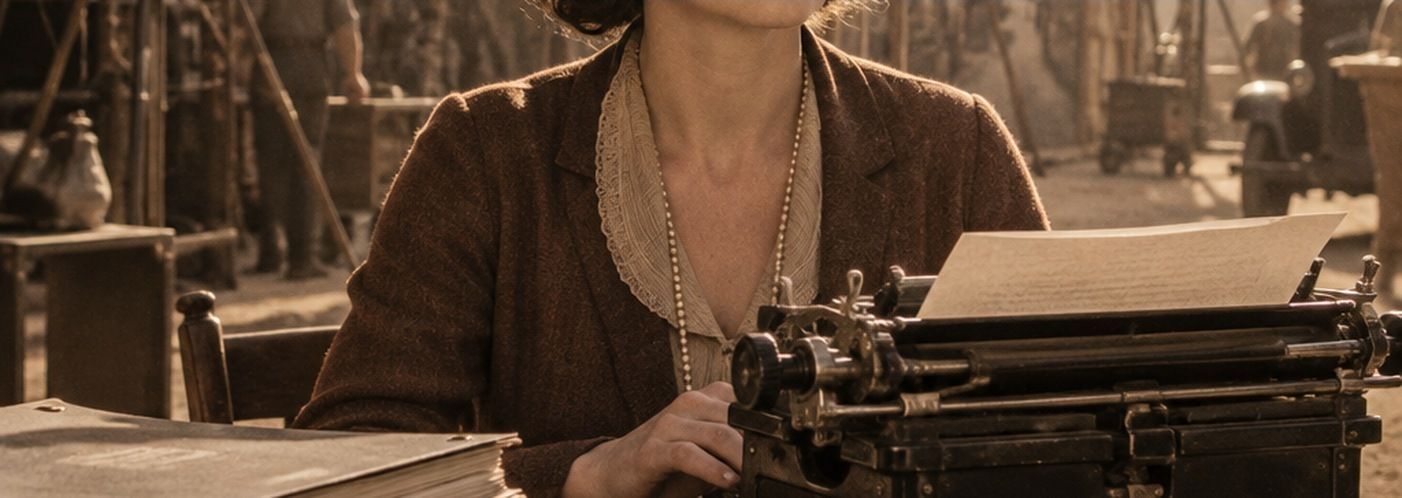
Frances Marion got her film education sweeping floors.
Lois Weber, one of the most powerful directors in early Hollywood, hired her and put her to work shifting scenery, cutting film, and writing press releases. Marion called it her film school, and it was a woman who gave her that first opportunity.
She took it and became the highest paid screenwriter in Hollywood. More than a hundred and thirty films reached the screen under her name, and the number of scripts she wrote runs well past that. She was the first woman to win an Academy Award for writing, for The Big House. She won a second for The Champ. She covered the First World War as a correspondent. Then she spent thirty years helping other women.
She wrote the parts that made Mary Pickford, Marie Dressler, Greta Garbo, Lillian Gish. Not generic roles they happened to land. Parts built around what each of them could actually do. Adela Rogers St. Johns described her as having the rugged determination of a boa constrictor where a friend was concerned. That's the mentor I want. Not gentle. Determined.
Her era was the high-water mark. Women were writing an enormous share of American film in the silent years. When sound arrived and the studios consolidated, that ended. Marion and the women around her ended up downplaying their own work to avoid remarks about the tyranny of the woman writer. Our numbers fell, and they didn't come back for a very long time.
So when somebody tells you the field has always looked like this, it hasn't. It was better, then it was made worse, then we fought our way back. That's a useful fact, not a depressing one. What got built can get built again, and the first time it was built by women who kept helping each other.
She said it plainly. I owe my greatest success to women. Be somebody's Lois Weber this year. You don't need a studio. You need to read one script and make one introduction.